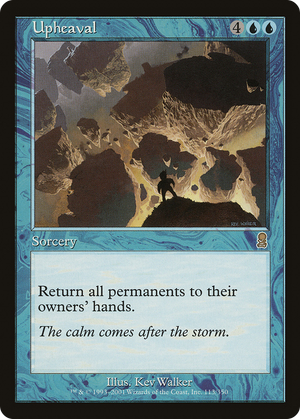
Upheaval


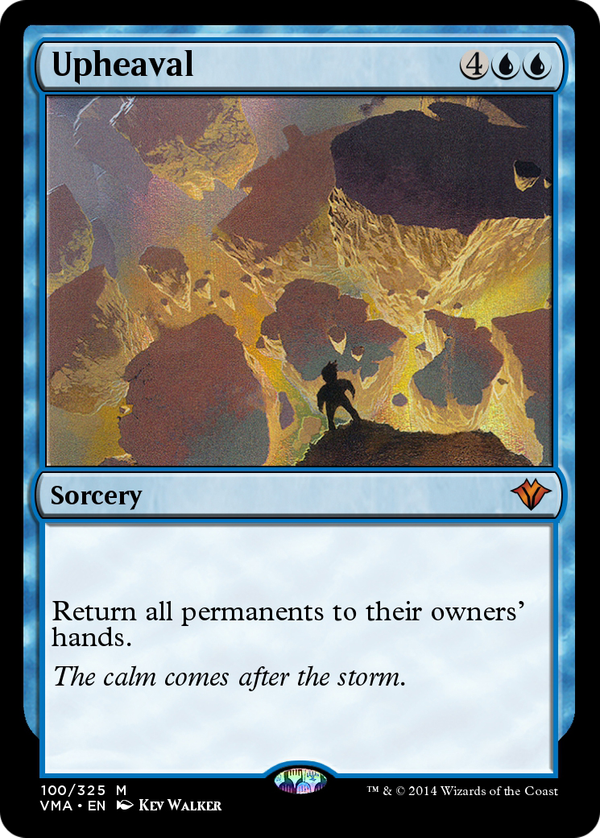
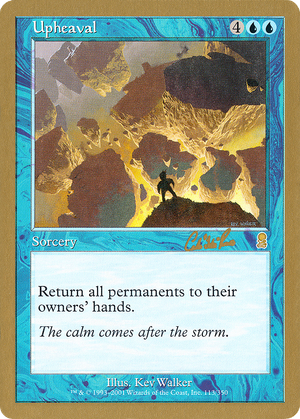
Total resets are an old idea, but most of them cap the carnage somehow: Wrath of God hits creatures, Armageddon hits lands, Balance trims down to parity rather than zero. This one refuses the cap. Everything goes back to hand, lands and creatures and artifacts and enchantments alike, leaving both players staring at a fistful of cards and an empty board. The symmetry is total on paper and a lie in practice, and that gap is what made the card a problem. Whoever casts it spent six mana to do nothing on its own, so the only way to profit is to break the mirror: float mana before it resolves, then slam something onto the now-empty battlefield while the opponent rebuilds from scratch. Psychatog was the classic payoff, but the design tension predates any single combo. A board reset that returns rather than destroys hands the recovery advantage to whoever planned for the reset, and planning is exactly what a control deck does. The card became a defining engine of its block's constructed era, warping deckbuilding around a single turn of explosive recovery, and it has stayed off most Eternal radar precisely because a one-sided Upheaval ends games on the spot. The lesson it taught is that perfect mechanical symmetry is no protection at all when one player gets to choose the moment.