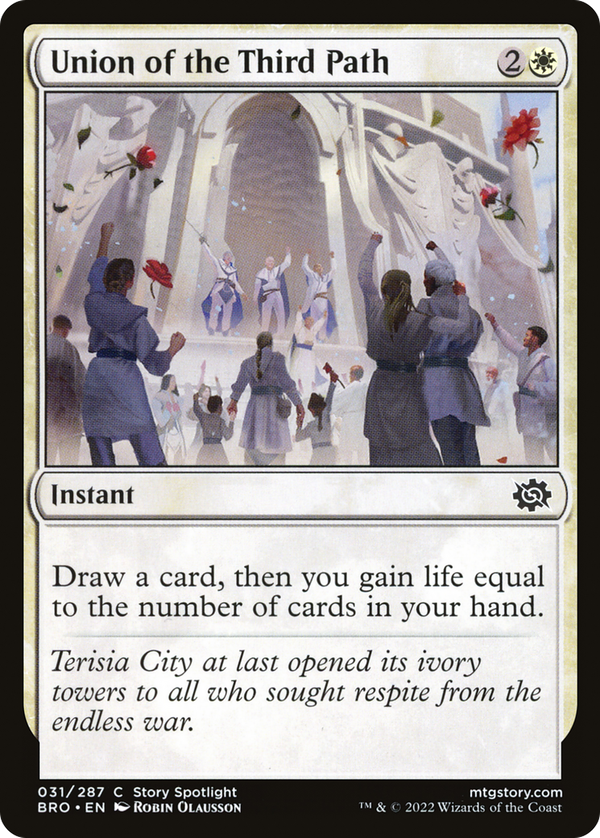
Union of the Third Path


The wording hides a deliberate ordering trick: you draw before counting, so the fresh card is already in the total when the lifegain resolves. That one sequencing choice is the whole design. A fixed-value cantrip would gain the same amount whether you were flooded or empty; this one scales with a resource you were already choosing to hoard. It rewards the full grip and punishes the spent one, which quietly inverts the instinct of a control deck that likes to trade its cards away. Sit on a fat hand and this is a real life swing at instant speed; cast it off the top with two cards left and it settles for a modest cushion against aggression. The design lives openly in that variance. Its most natural window is reactive: fire it after an opponent commits to combat, and a card you already drew becomes a buffer against the next attack while replacing itself, so you lose no ground on cards. This is a white toolkit effect built for durability rather than tempo, the kind of instant that asks you to accumulate cards and then cash the count in at the moment the math peaks.