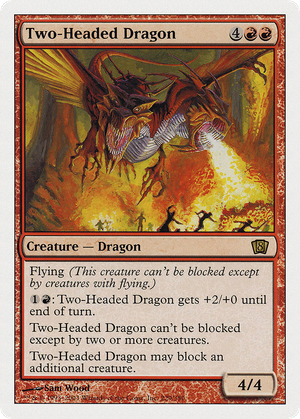
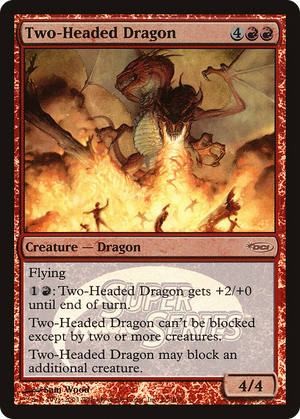
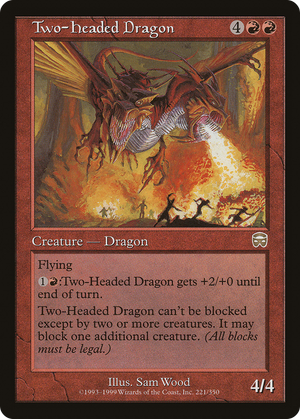
Two-Headed Dragon


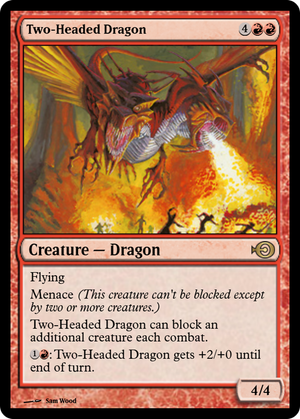
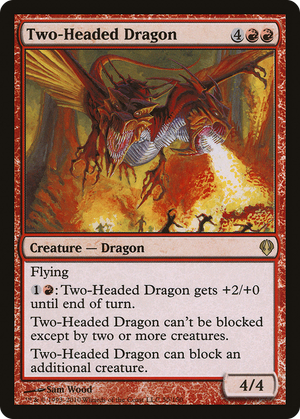
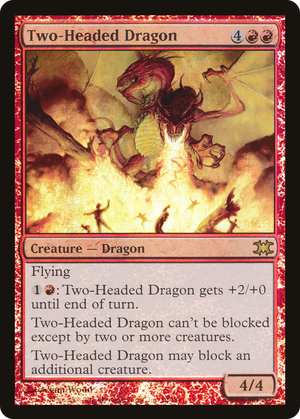
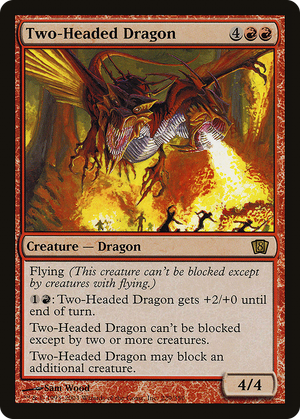
Menace before menace had a name. The clause spelling out that this creature can't be blocked except by two or more creatures is the keyword written in longhand, years before Wizards bundled the rule into a single word and started reprinting it freely. What lifts this Dragon above its dated rate is how its abilities converge on the same goal: the menace clause forces an opponent to commit two creatures to stop it, the flying keeps it above most of the ground those bodies occupy, and the firebreathing pump turns every unblocked swing into a clock that scales with open mana. On defense, the same math runs in reverse, letting the body absorb two attackers at once and dominate a stalled board. That convergence is the design idea: a creature built to bend combat in its favor whether it is attacking or defending, then close with reach the board state can't supply on its own. The cost is the era showing through. Six mana for a 4/4 was already a steep ask when this kind of Dragon first appeared, and the pump asks for more on top, so the card reads as a top-end payoff rather than a tempo play. It is a clean window into how much rules text a creature carried before keywording compressed these effects into a few words, and into how Dragons were priced when they still had to earn their evasion line by line.
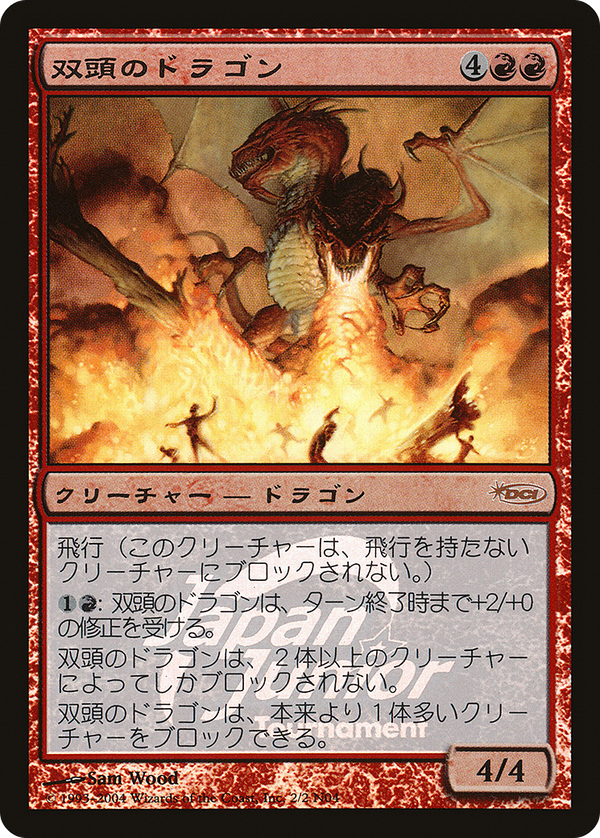
Rules text
 : This creature gets +2/+0 until end of turn.