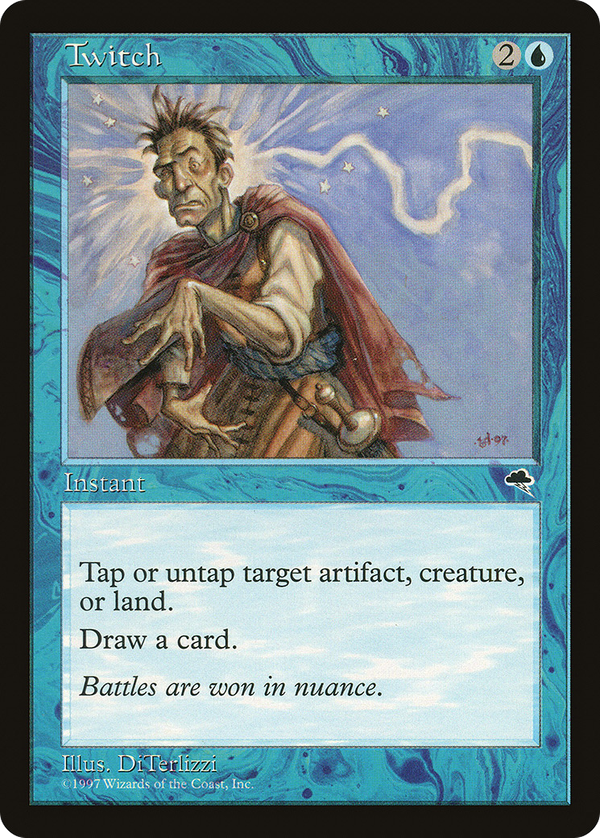
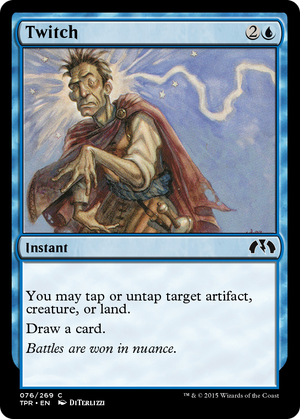
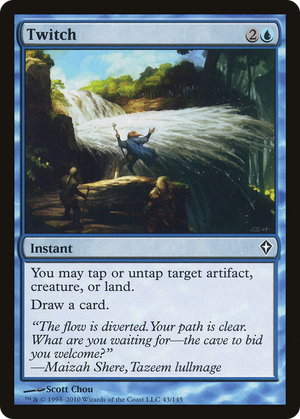
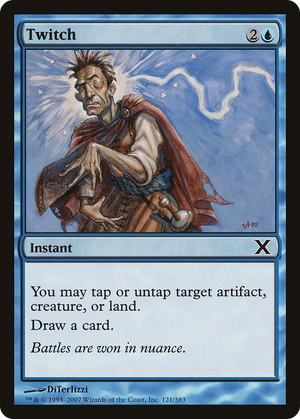
Twitch


The clearest early example of a cantrip whose attached effect does almost nothing on purpose. The tap-or-untap clause is real but marginal: it can break a defender's untap, push a single point of damage through, or untap a mana source for a trick, but most of the time the line that matters is the second one. Three mana to draw a card is a deliberately bad rate, and the design absorbs that by stapling a small, situational utility to the draw so the spell is never a total blank. This is cantrip philosophy in an early, unrefined form: the replacement-card guarantee makes the spell low-risk to run, and the minor effect is gravy rather than the point. Later blue cantrips tightened the math (Brainstorm and Opt do more for less, and tempo tricks attach a draw to an effect that genuinely swings a turn), which is exactly why a card built like this reads as a relic of a period when "draw a card attached to something" was still being calibrated. The tap-or-untap clause is the tell: broad enough to look flexible (artifact, creature, or land), narrow enough in impact that it rarely changes a board state, and cheap enough that it costs the designer nothing to include. A study in how to make a draw spell that is always castable without ever being good.