Tunnel Vision


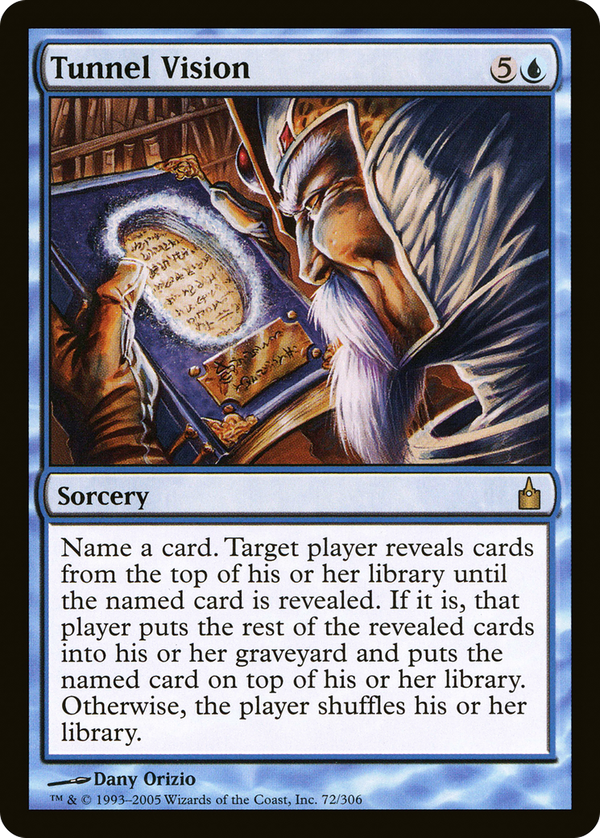
The mill it dangles is real but inverted from how it reads: the spell bins everything above the named card, so the more copies a deck runs, the sooner one surfaces and the less the player loses. Naming a basic land deals almost no damage, because the first one shows up near the top. The actual kill runs the other way: you want a card that sits as deep as possible, ideally a known one-of buried near the bottom, so the reveal walks through almost an entire library before it stops. That gap between ceiling and floor is the whole design. The ceiling is a genuine one-card kill against a library you have information about; the floor is six mana for a glorified shuffle, because a whiff reassembles the pile and hands nothing back. Pointed at an opponent, the variance is brutal, since you rarely know where their cards live. The line that turns it from novelty into engine is self-targeting: arrange your own library so the named card rests at the bottom, then resolve against yourself to empty everything above it into your graveyard in one shot, feeding reanimation or a self-mill payoff in a single resolution. That is the puzzle this card has always posed, a sorcery built less to cast in a fair game than to abuse one improbable, fully orchestrated line.