A two-drop body for TMT limited that mostly exists to be a recursion outlet in BX grindy decks, where a 2/2 that keeps coming back at five mana wears down opponents who have used their removal on bigger threats. The opportunity cost is real: five mana to get a tapped 2/2 is too slow when the format is medium-speed and rewards equipment carriers and legendary payoffs. Take it late as a curve filler in a black deck without a better two-drop, cut it from any deck with a real plan.
Tunnel Rats
Creature — Rat

Format takes
How this card plays
8 reviews
A recursive sacrifice body for grindy black Commander decks that want a creature to feed altars and aristocrat triggers without spending a card each turn. Reassembling Skeleton does the same job for a cheaper recursion cost, both returning tapped, and shows up first in every redundancy search a deckbuilder runs. Five mana to bring back a 2/2 is steep against the skeleton's two; the larger body matters for combat and stat-counting synergies, but most aristocrat shells want the cheap loop, not the bigger blocker. Cut for the skeleton in any deck with access to it, which is most of them.
The recursive grind-creature slot belongs to Reassembling Skeleton, and that comparison settles most of this card's Modern case before it begins. Both are 2/2-class bodies that come back from the graveyard under their own power, both want to die repeatedly, and both are looking at the same homes: a Yawgmoth Combo shell that wants a cheap creature to loop through the Profane Familiar's sacrifice-and-recur engine, or a sacrifice-fodder role in some grindy Rakdos midrange build.
In Yawgmoth, the incumbent is the Skeleton, and it is the incumbent for a concrete reason: it returns for one mana fewer, and the tapped clause here is dead weight. Yawgmoth wants the creature back to sacrifice immediately, not to attack, so the tapped entry costs nothing on flavor but the extra mana on the return is a real tax in a deck that is already mana-hungry across a long combo turn. Five mana for a recursion that the Skeleton does for less is a downgrade in the one deck most likely to want this effect.
The resilience the identity blurb points to (exile-only removal, immunity to wraths and edicts) is genuine, but the Skeleton shares all of it. There is no axis on which this rat is ahead of its cousin except that it enters tapped, which is a drawback.
Legal in Modern, but yet to register in tracked tournament play this season. That is the honest read: the slot is taken by a cheaper, older card that does the same job, and nothing about the rat's higher recursion cost or tapped body argues for the swap.
A two-mana grindy black body for a recursion shell that does not exist in Standard right now, where the format's black decks want immediate impact off their two-drops rather than a 2/2 that returns tapped for five. The recursion is the whole pitch, and five mana to bring back a vanilla body a turn behind is too slow for the matchups Standard black is built to win. Legal, but yet to register in tracked tournament play. There is no archetype here that wants the rat over a removal spell or a real threat.
Legal in Pioneer since its March 2026 printing, this has yet to register in tracked tournament play this season, and the structural read explains why. The recursion is calibrated for a grind that Pioneer's black decks do not run. Five mana to return a 2/2 tapped is a rate that rewards a long, attrition-heavy game where the same body dying repeatedly accrues value, and the format's black archetypes are not built around that loop.
Rakdos Midrange wants its two-drops to apply pressure and trade up: Bloodtithe Harvester and the like do work the turn they land, while this enters with a recursion clause it cannot use until the late game and a body that contributes nothing to combat math the turn it comes back. Mono-Black Aggro and Dimir Control have even less use for a slow, self-recurring blocker. The decks that grind in Pioneer lean on planeswalkers and card advantage spells, not on a creature that costs five mana to bring back tapped.
Pioneer does not have a dedicated black attrition shell that prizes recursion at this rate. The closest the format offers is the midrange core, and that core has settled on threats that matter immediately. Until a black deck appears whose plan is to win the longest possible game on the back of repeatable chump bodies, this stays a draft-and-grind curiosity rather than a slot in any tournament list.
A grindy two-drop for mono-black or black-based control in Pauper, the kind of deck that wants a creature that keeps coming back across a long attrition game. The problem is the rate: five mana to return a 2/2 tapped is slow even by Pauper's standards, and the format already runs Reassembling Skeleton for a cheaper recursion in the same colors and the same slot. Legal, but it has yet to register in tracked play, and there is no attrition shell here that prefers it to the skeleton.
A 2/2 for two whose recursion costs five mana per trip in a format where Ancestral Recall draws three for one and Demonic Tutor finds whatever the grind needs for two. The skeleton-style engine is built for long games Vintage rarely plays, and the tapped re-entry only widens the gap. Legal, but yet to register in tracked tournament play. Noise.
Reassembling Skeleton sets the bar for self-recursing chaff at one mana, returning itself for less and without the tapped clause. This costs two to cast and five to bring back, tapped, which puts the body off the combat math the turn it returns. Legacy does not pay that rate for a 2/2 when its grind engines (Reanimate, Animate Dead, the cheaper skeletons) recur far stronger bodies. The two-mana cast pays Daze on the way in, and the recursion is too slow to matter against decks that goldfish by turn three. Legal, but yet to register in tracked tournament play. Does not clear the bar.
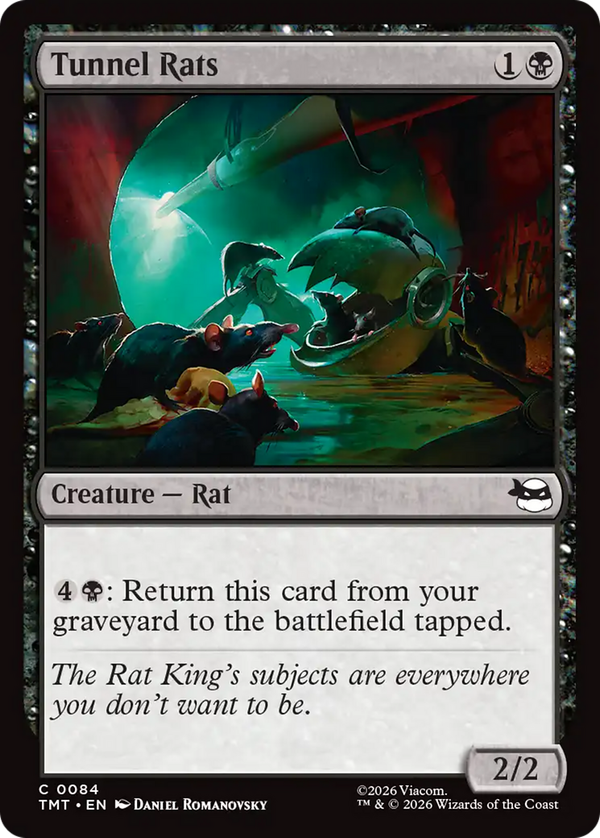
TMT · #84common
Pricing
Normal: $0.17
Foil: $0.21
Oracle Text
Rules text
 : Return this card from your graveyard to the battlefield tapped.
Legalities
Format Status
Standard
Legal
Pioneer
Legal
Modern
Legal
Legacy
Legal
Vintage
Legal
Commander
Legal
Pauper
Legal
Brawl
Legal
Historic
Legal
Alchemy
Legal
Timeless
Legal
Standard Brawl
Legal
More formatsFewer formats
Old School
N/A
Premodern
N/A
PreDH
N/A
Pauper Commander
Legal
Oathbreaker
Legal
Gladiator
Legal
Penny Dreadful
Legal
Duel Commander
Legal
Future Standard
Legal
COMPETITIVEBRAWL
Legal
TLR
Legal