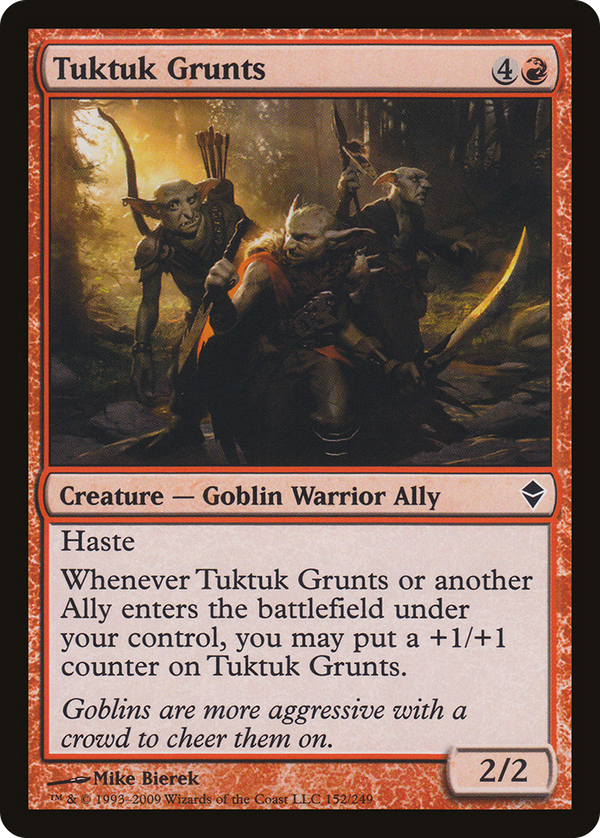
Tuktuk Grunts


The trigger shape distills the whole tribal payoff into one creature: a body that compounds with every Ally that touches the battlefield, including itself. That self-reference matters more than the base stats suggest. When it lands, its own enter trigger fires, so even on an empty board it can put a counter on itself and swing the same turn, and every subsequent Ally adds another counter on top. The 2/2 for five reads poorly against that math, but the value is about throughput, not the starting line: in a turn that drops several Ally bodies, the counters stack one per entry within the same window, and its own haste turns it into immediate pressure rather than deferred value. The optional wording is a formality; declining the counter is almost never the line you want. What the card asks for is genuine commitment to a single creature type. Without a steady stream of Allies feeding it, it sits there undersized, its haste pushing nothing meaningful. Built into a board that goes wide on Allies, it snowballs, growing fastest exactly when you flood bodies rather than dribble them out. It is a payoff scaled to horizontal commitment, the kind of design that only pays when the deck around it agrees to one shared identity.