Trove Tracker


A cantrip stapled to a body, then an escape hatch grafted onto the graveyard. The death-draw makes the front half self-replacing: trade it, chump with it, sacrifice it, and the card keeps flowing regardless. But the encore cost is where the design actually lives. In a duel it returns a single 2/2 attacker; against a full table it spins up one hasty copy per opponent, each forced to swing at its designated target. That scaling is deliberate. The ability is priced for a many-opponent game and does very little one-on-one, which is the exact opposite of how most creature-based value is tuned. The body with its death-trigger justifies running it; the graveyard activation is the payload you cash in once the game has gone long and your hand has run dry. What keeps it fair is the sacrifice-at-end-step clause and the sorcery-speed restriction on encore: the copies exist for one attack step and then evaporate, and because each dies to that end-step sacrifice, each fires its own death trigger, converting the burst of pressure into a fistful of fresh cards. This is a temporary swarm and a refill, not a permanent board. Encore itself is a keyword built around exactly this multiplayer math, and Trove Tracker sits at its plainer end precisely because the front half stands alone. The recursion is a bonus you build toward, not a reason to run the card by itself.
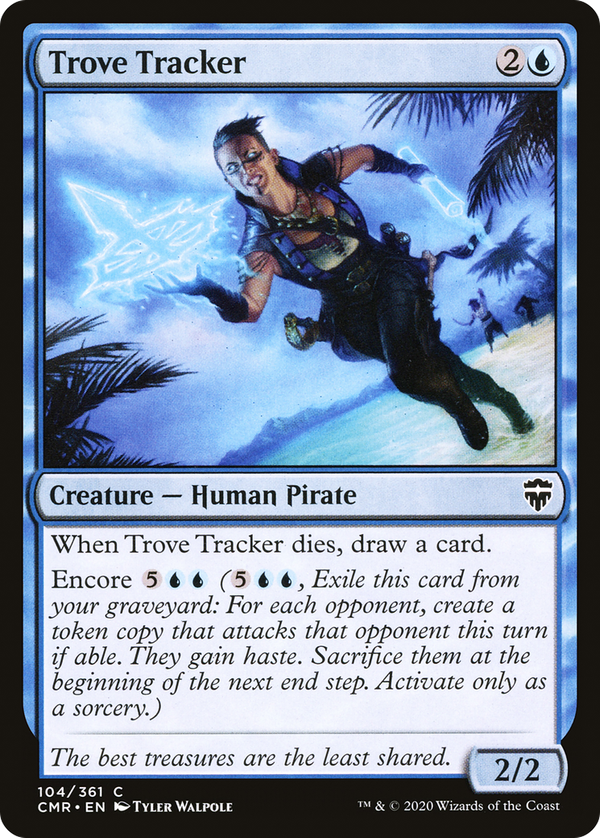
Rules text
 (, Exile this card from your graveyard: For each opponent, create a token copy that attacks that opponent this turn if able. They gain haste. Sacrifice them at the beginning of the next end step. Activate only as a sorcery.)