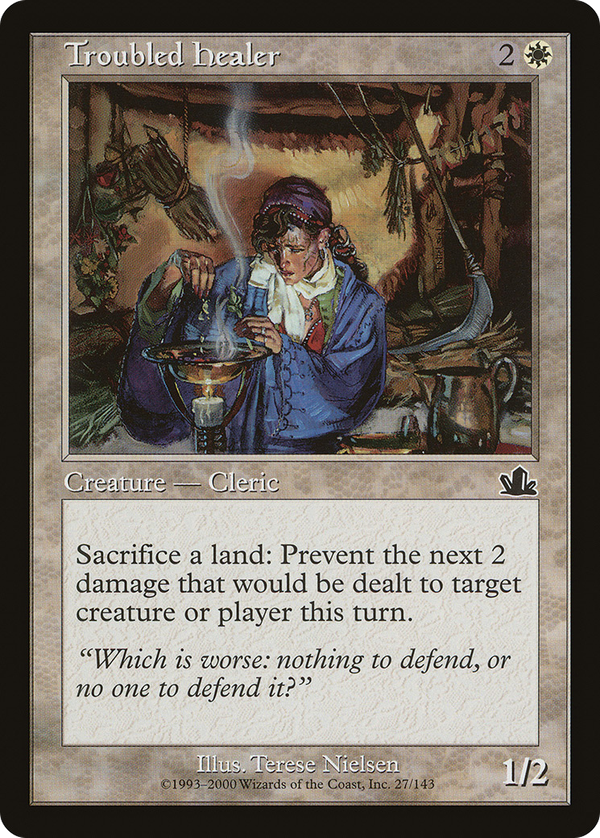
Troubled Healer


Damage prevention pegged to a sacrifice cost reads strange on a Cleric body, but the design slots cleanly into an early-era fascination with land as a spendable resource rather than just a mana source. The shield has no rate ceiling: each land becomes a one-shot two-point ward, so a flooded board converts into a stack of prevention instead of asking you to draw something more relevant. That structure points the card toward builds that already want to dump their mana base on purpose, paying with permanents rather than spells off the top. The catch is the same friction that defines all prevention from this period: it does nothing against the loss-of-life and destruction effects that aged into the dominant removal idioms, and a 1/2 with no evasion contributes little on the attack. The instant-speed timing is the saving grace, letting it fog a single creature, blunt a burn spell before it resolves, or push a blocker through combat alive. Each activation strips your own resources, though, so the ceiling and the floor sit close together: every two points prevented is a land you no longer have. It is best understood as an artifact of a time when prevention was still treated as a genuine defensive axis and the mana base was currency worth liquidating, a small Cleric built to trade permanents for chip-by-chip survival.