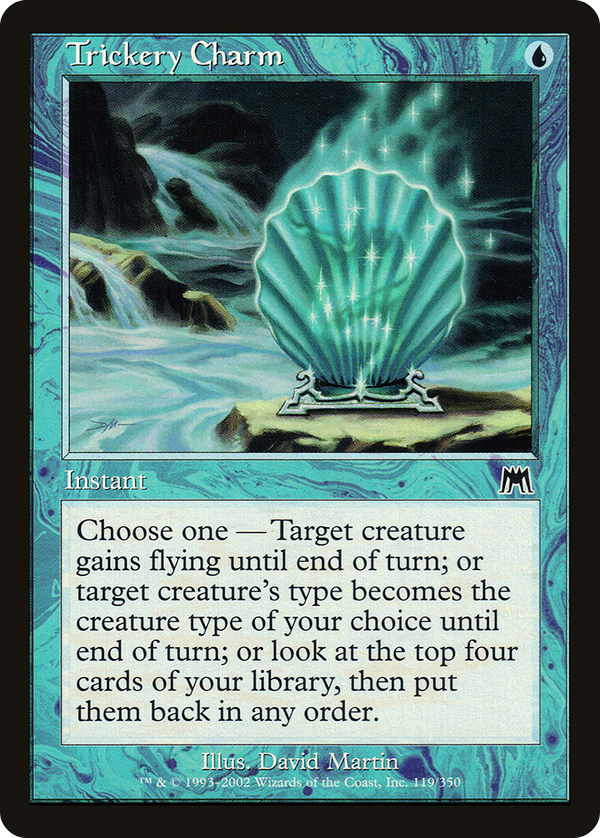
Trickery Charm

The second mode is the giveaway: granting a creature any type you choose is a tooling-up effect for a tribal block where half the cards read "if you control a Goblin" or "for each Soldier you control." That mode is the design reason this exists, and it is also the mode almost nobody plays, because the payoffs that would justify retyping a creature mid-combat rarely lined up neatly enough to spend a card on. What actually got cast was the flying clause, an evasion granter cheap enough to push the last points through, and occasionally the dig, a top-four reorder that smooths a draw without changing card count. The result is the classic charm problem: three options that each almost matter, stapled together to clear a playability bar no single one reaches alone. The flying line competes with dedicated evasion spells, the library look competes with actual card advantage, and the type-change line waits for a tribal context specific enough that it usually never arrives. Each color in the block got its own type-themed charm, and the cycle documents how the designers wanted players to engage with the tribal theme: not through static lords alone, but through instant-speed creature-type manipulation you could hold up and fire on a payoff trigger. The ambition is more interesting than the card.