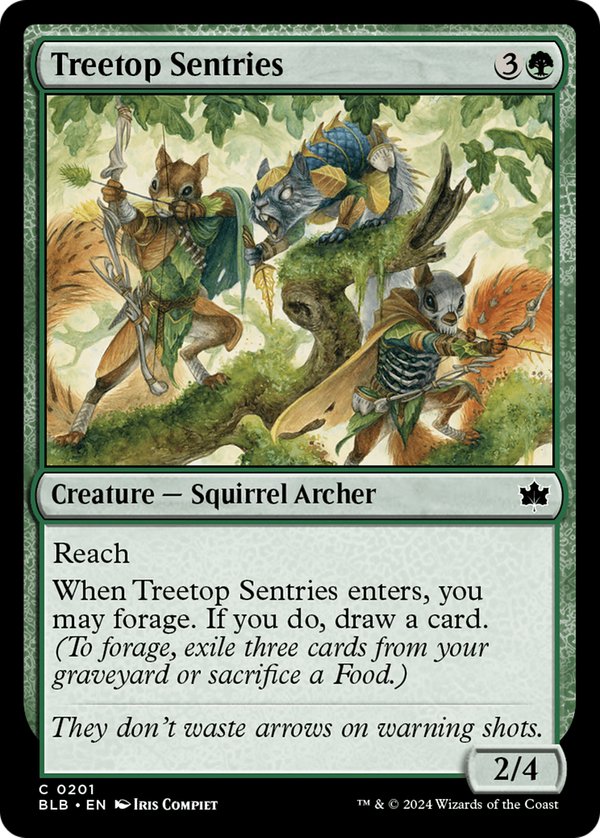
Treetop Sentries


The forage trigger inverts the usual graveyard-payoff logic: instead of rewarding a full yard, it spends one, converting three dead cards into a fresh draw off the creature's arrival. The "if you do" clause is what balances the rate. When you can neither exile three cards nor sacrifice a Food, the trigger simply passes and you are left with a plain reach blocker, which is why the defensive 2/4 body is priced on the assumption you will usually cash in. Green's reach-carrying walls tend to lean on a tribal or resource context to justify their stats, and the Squirrel Archer typing points at where the fuel comes from here: a package sitting at the crossroads of Food generation, self-mill, and a Squirrel shell that would rather eat a token than pitch its graveyard. Structurally it behaves like a lot of midrange green cantrip-creatures (stabilize the ground, refill the hand), but foraging changes when the card advantage lands. Most decks fire the trigger reliably only after building toward it, so the draw arrives on the turn you decide your graveyard or your Food supply is worth more as a card than as a standing resource. That decision, rather than the body or the draw in isolation, is the design's real content.