Treefolk Healer


The split between a green body and a white activation cost isn't an oversight; it's a deliberate prod toward what we now call Selesnya, written in an era when activated abilities routinely demanded mana of a second color to nudge players into the splashes the block was selling. The card is mono-green by frame but two-color by demand: to do its work it taxes white mana, a structural quirk that made gold-adjacent design feel cohesive before the color pairs had names. The prevention itself is a repeatable two-point shield, a Healing Salve on a stick, and the math is where the design runs aground. A 2/3 that needs to survive, untap, and find white mana to fire asks a great deal of a defensive plan, and the shield it produces sits well below what five mana ought to buy even when repeated. What's left is a creature whose interesting feature is structural rather than competitive: a snapshot of how an early multicolor design vocabulary taught its cards to want two colors at once, even when the rate didn't justify the friction of assembling them.
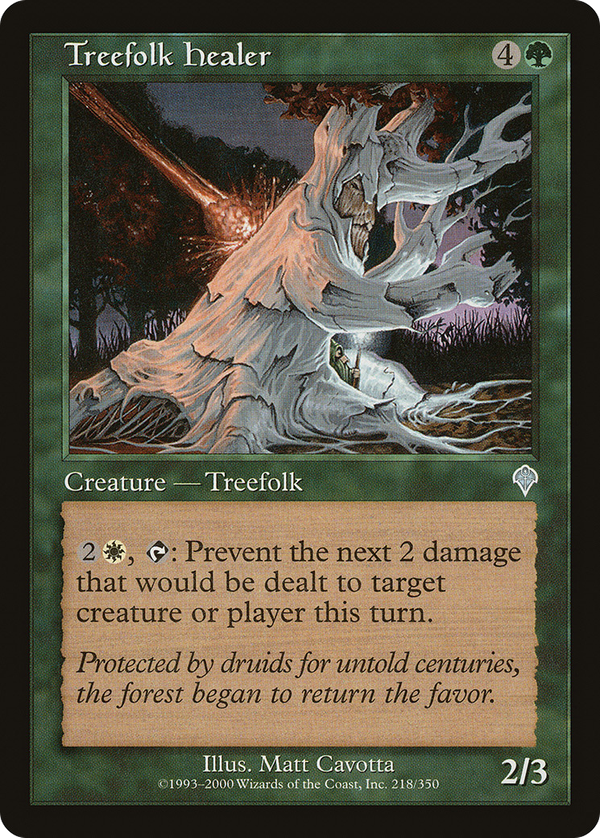
Rules text

 ,
,  : Prevent the next 2 damage that would be dealt to any target this turn.