Treasure Chest

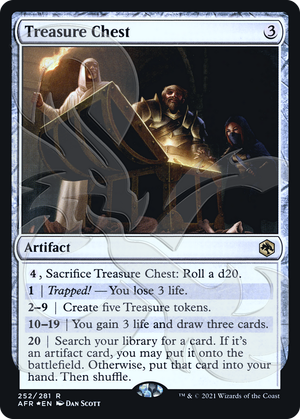
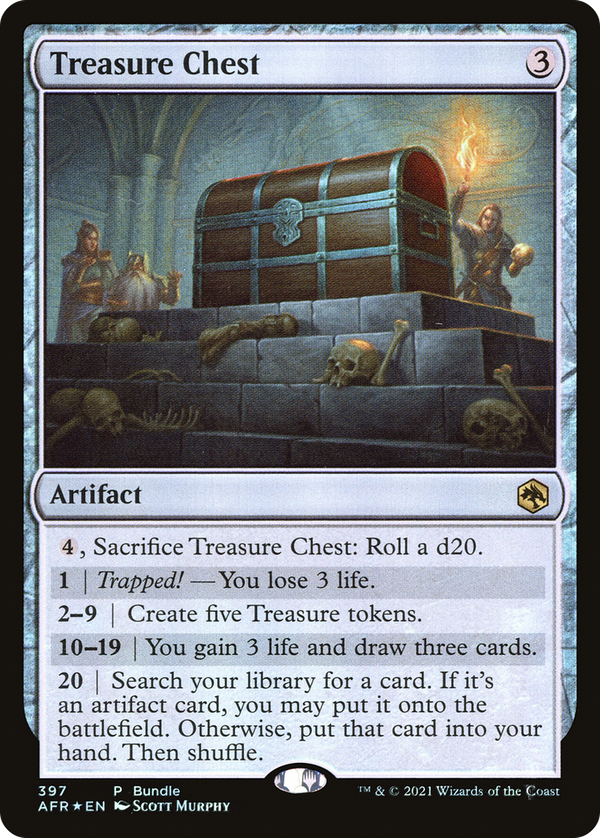
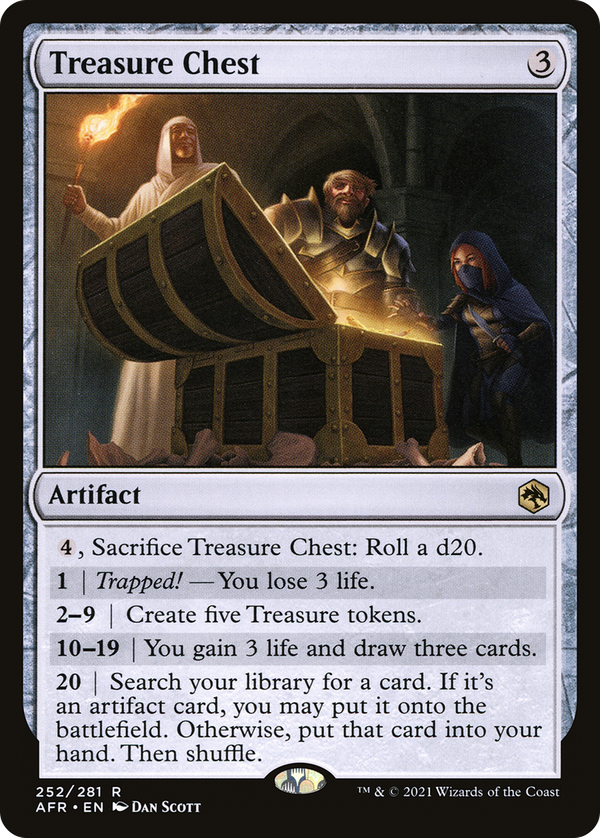
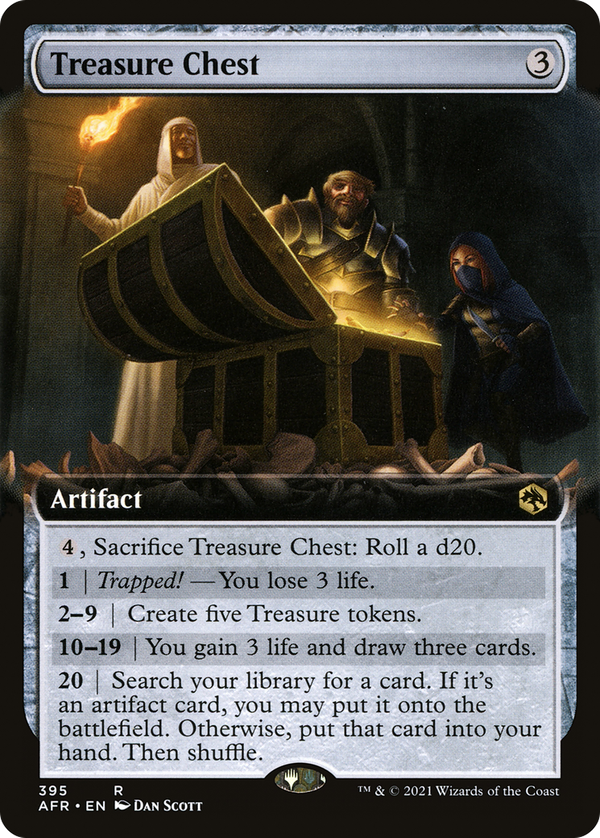
A d20 built into a piece of cardboard, and one of the early designs to fold tabletop dice-rolling into the game as a mechanic rather than a flavor gag. The construction is a payoff spread rather than a reliable effect: sink a total of seven mana across the cast and the sacrifice, then let the die decide whether you draw three and gain a cushion (the middle band that catches half the rolls), replace yourself with five Treasure, or, on the outlier 20, tutor any card and slam an artifact straight onto the battlefield. The 1 is the tax the whole thing pays for: a small chance the machine bites back with a three-life loss, which keeps the top-end tutor honest without gating it behind a color or a condition. What makes the spread work is that even the worst common outcome (five Treasure) is a resource swing, not a whiff. That floor separates it from a coin-flip novelty: you are rarely rolling for nothing, only rolling for how much, and each Treasure created is deferred mana toward the next payoff rather than an immediate rock. Decks already leaning on dice manipulation get the most out of it, since nudging the result away from the trap and toward the upper bands turns a one-shot gamble into something closer to a plan.
Rules text
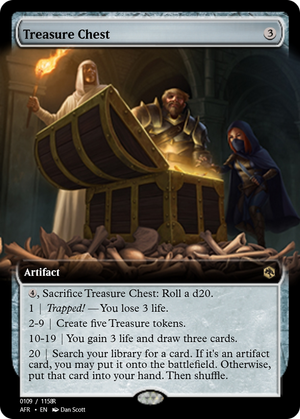
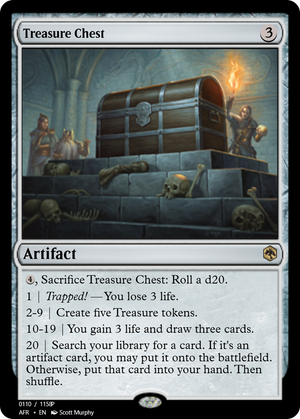
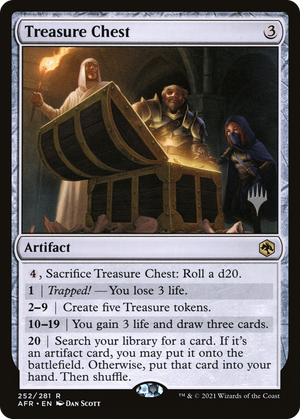
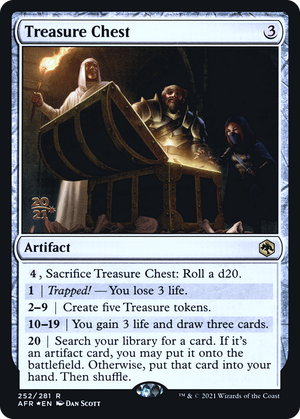
 , Sacrifice this artifact: Roll a d20.
1 | Trapped! — You lose 3 life.
2—9 | Create five Treasure tokens.
10—19 | You gain 3 life and draw three cards.
20 | Search your library for a card. If it's an artifact card, you may put it onto the battlefield. Otherwise, put that card into your hand. Then shuffle.
, Sacrifice this artifact: Roll a d20.
1 | Trapped! — You lose 3 life.
2—9 | Create five Treasure tokens.
10—19 | You gain 3 life and draw three cards.
20 | Search your library for a card. If it's an artifact card, you may put it onto the battlefield. Otherwise, put that card into your hand. Then shuffle.