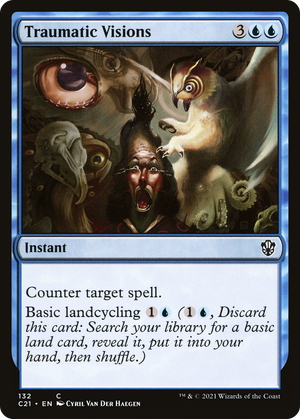
Traumatic Visions


Five mana for a hard counter is a price no constructed deck has voluntarily paid since the earliest sets stopped pricing counterspells this high. What rescues the card is its escape hatch: the  basic landcycling clause means the counter half never has to be the part you draw. Hold it when the opposing deck threatens something worth answering, pitch it for a basic land when the game wants mana instead. That dual identity is the entire design: a reactive answer that degrades gracefully into a smoothing tool, so the deckbuilding cost of running it sits near zero even though the rate as a counterspell is steep. The cycling activation does the real work, slotting into draws where you would otherwise flood on situational interaction or starve for lands. The philosophy is older than the card itself: a high-cost answer is acceptable if it stops being dead the moment it stops being relevant, an idea other counters with built-in cycling share. Read the counter half as the upside and the cycling half as the floor, and the math inverts: you are not paying five mana for a counterspell, you are paying for a basic land that occasionally turns into one.
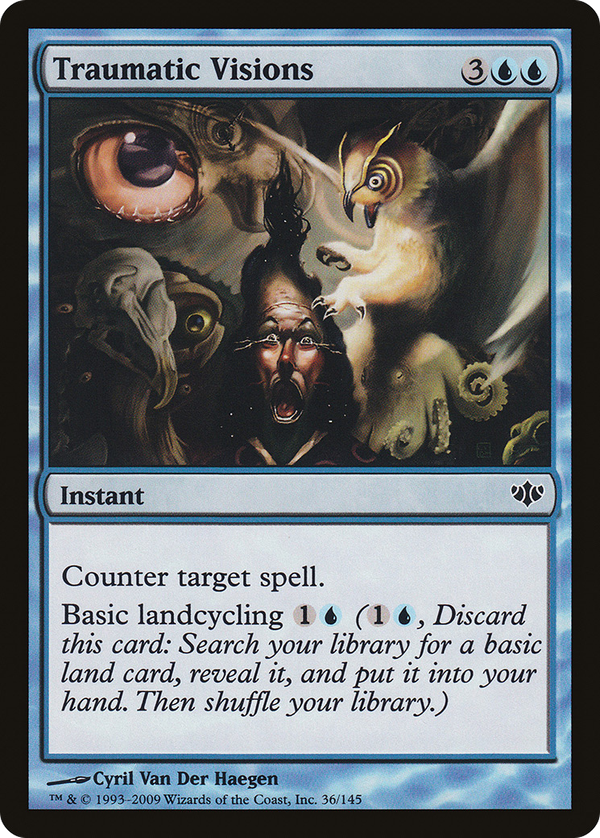
Rules text
(, Discard this card: Search your library for a basic land card, reveal it, put it into your hand, then shuffle.)