Trapped in the Screen


Oblivion Ring taught white that the cleanest way to answer any permanent is to exile it and hold the exile hostage: kill the enchantment, get the permanent back. The design has been reprinted and re-skinned constantly (Banishing Light, Journey to Nowhere, Skyclave Apparition's variant), and the enduring weakness is always the same. The answer is itself a permanent, which means every enchantment-removal spell in an opponent's deck is now, indirectly, a way to reverse your exile. That is where Ward earns its keep here. The tax does not make the enchantment unkillable; it makes the round-trip expensive. An opponent who wants their bomb back via targeted removal has to pay two extra mana on top of whatever their removal costs, which often means the recursion no longer fits inside the turn they need it. The exile clause is written generously (artifact, creature, or enchantment, so it doubles as flexible answer to whatever the biggest threat on the board happens to be), and the Ward number is calibrated to the exile rather than to the enchantment's own cost: two mana to protect a swing that could be worth far more. It is a small structural adjustment to a decades-old template, but it addresses the one line of counterplay that template always left open, and does so without pushing the rate past what a three-mana removal enchantment should cost.
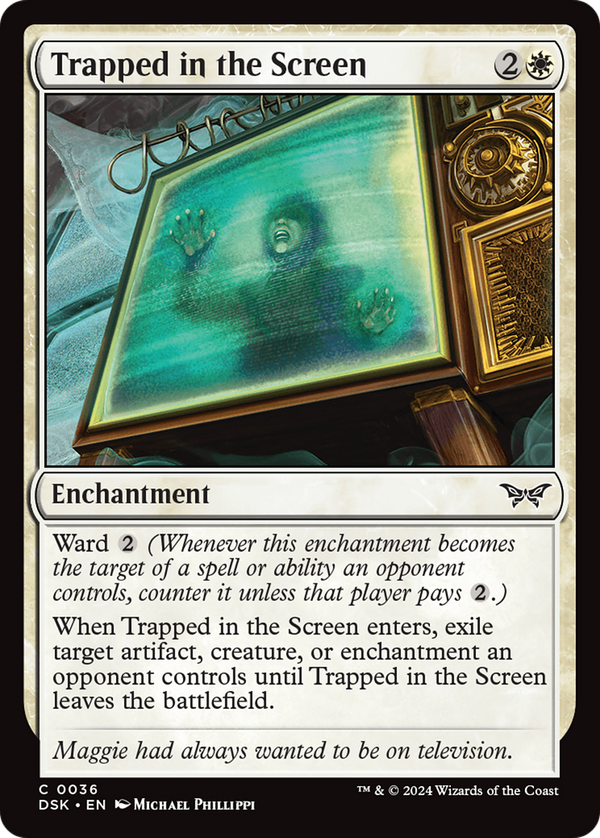
Rules text
(Whenever this enchantment becomes the target of a spell or ability an opponent controls, counter it unless that player pays .)
When this enchantment enters, exile target artifact, creature, or enchantment an opponent controls until this enchantment leaves the battlefield.