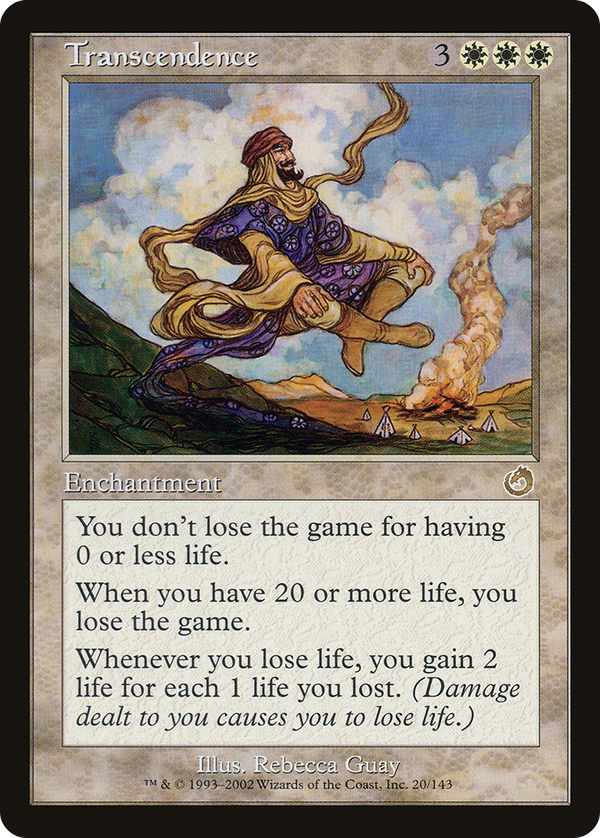
Transcendence


Most life-total cards push you in one direction: gain it, drain it, race past it. This one inverts the entire axis. The first line removes the floor, so dropping to zero or below no longer kills you; the second installs a ceiling at twenty, the exact number most games begin at, and makes reaching it lethal. The third line is the trap that makes the first two cohere: every point of life you lose returns doubled, so any attempt to damage your way down (or any deck stuffed with life payments) overshoots and shoves you back toward the deadly twenty. With this in play the danger runs in only one direction. There is no bottom edge to fear; you cannot die from being low, so the entire game becomes a matter of staying beneath the ceiling while everything in the format is built to lift you toward it. It is a puzzle box wearing an enchantment's clothes, the kind of design an early-era set's black-and-white morality theme invited: a card about the spiritual cost of perfect peace, where transcending the cycle of damage and recovery becomes its own way to die. Almost nothing about it is built to win a game in the conventional sense. It exists to rewrite the rules of life and loss for the player who dares to keep it on the battlefield, and to punish anyone who treats a life total as a resource to spend freely.