Trade the Helm


Swap effects have always carried a structural liability: they leave both players with a permanent, so the classic "give and take control" builds stayed narrow, forced to hand the opponent something worthless enough that the exchange cost nothing. Widening the target field to any artifact or creature on either side loosens that constraint. You can give up a spent mana rock or a token and pull back a threat, or you can go the other direction and donate something that actively hurts whoever receives it. Because the opponent keeps whatever crosses the table, this is not a steal in disguise; the payoff lives entirely in the gap between what you send and what comes back, and when that gap collapses (your opponent has nothing worth taking, or you have nothing safe to part with) the sorcery does nothing at all. That is where cycling for two earns its place: it converts a dead card into a fresh draw in the games where the exchange never lines up. The problem this design solves was never the ceiling, which control-swap effects have always had; it was the floor, which used to be the ground.
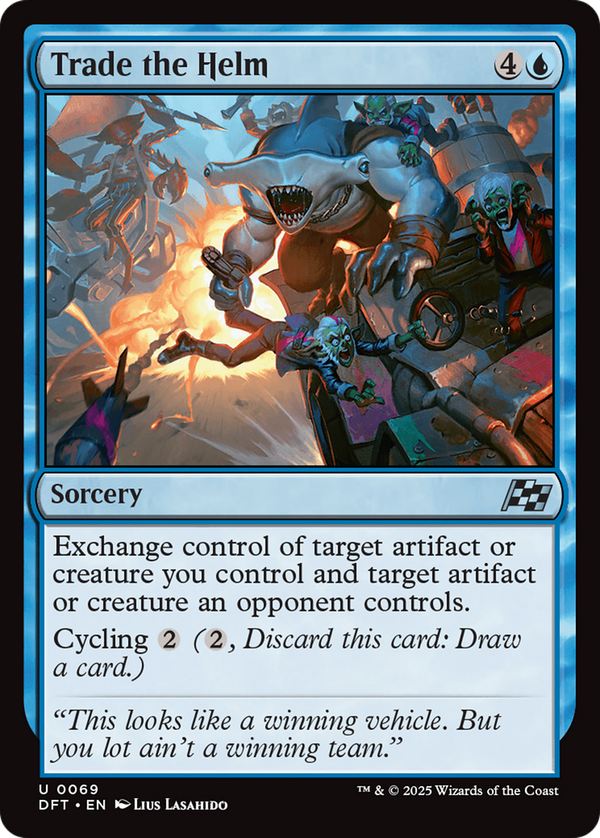
Rules text
 (, Discard this card: Draw a card.)