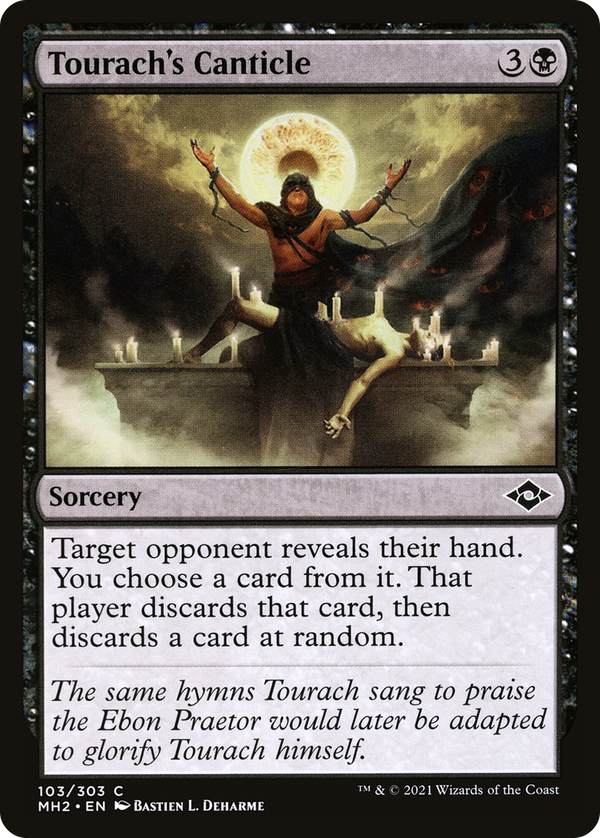
Tourach's Canticle


Targeted discard usually asks for one clean decision: name the threat, take it, done. This one splits the outcome, and that fork is what the whole card is built around. You strip the card that scares you most, then the game reaches in blind and takes something else on top. Against a full hand you can read, the random tag is pure extra pressure; against a thinning grip it stops being a bonus and becomes bookkeeping. With one card left, your choice takes it and the random discard does nothing; with two, you take one and the random clause deterministically takes the other; only from three cards up does chance re-enter, and even then it guarantees a discard, never a whiff. What the two-for-one buys, at a price heavier than the genre's efficient examples like Thoughtseize or Hymn to Tourach, is a way past the natural ceiling of hand attack: discard normally trades one card for one and cedes tempo, but the random discard lets a single sorcery erase two, which is the arithmetic that keeps grinding black strategies from running dry. The friction is timing. At four mana and sorcery speed, it lands too late to answer the fast starts that most punish a full grip, and by the time it is castable the opponent has often already spent the cards you most wanted gone. That tension (reach that outstrips its rivals, delivery slower than any of them) locates where the card belongs: not as a proactive turn-one strip, but as an attrition piece for decks content to trade resources until the opponent has none left.