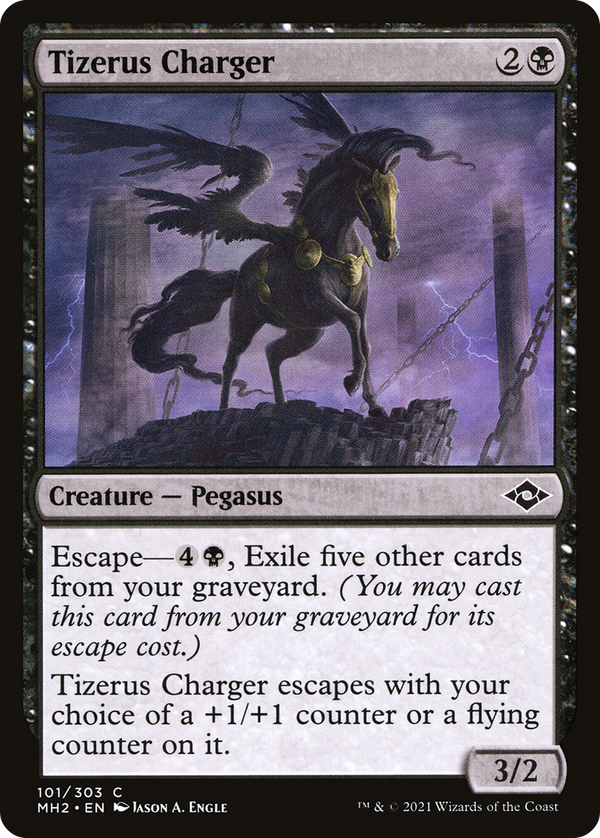
Tizerus Charger


The counter choice is what elevates this above a generic recursive threat. Bringing a 3/2 back for five mana and five exiled cards is a heavy tax on a small body, so escape has to hand you something worth the outlay: each return, you pick between a +1/+1 counter and a flying counter, tailoring the mode to the board rather than committing to a fixed shape. Against a clogged ground, the flying counter turns the Pegasus into an evasive clock. When you are racing or trading up in combat, the +1/+1 counter yields a 4/3 that dodges more removal and wins more exchanges. That flexibility rewards grindy black decks that stock the graveyard while doing their normal business, where the escape cost becomes a sink for resources they were already spending. Note the counter does not persist across recursions: when the Charger dies, its counter goes with it, and a second escape puts a fresh object onto the battlefield carrying only the mode you choose that time. Each return is its own decision, not an accumulation, which keeps the card from ballooning into an oversized flier over a long game. The Pegasus type is nearly incidental to the function; this is graveyard-value engineering, an attrition threat that keeps coming back and keeps adapting to whatever beat it last.
Rules text
 , Exile five other cards from your graveyard. (You may cast this card from your graveyard for its escape cost.)
This creature escapes with your choice of a +1/+1 counter or a flying counter on it.
, Exile five other cards from your graveyard. (You may cast this card from your graveyard for its escape cost.)
This creature escapes with your choice of a +1/+1 counter or a flying counter on it.