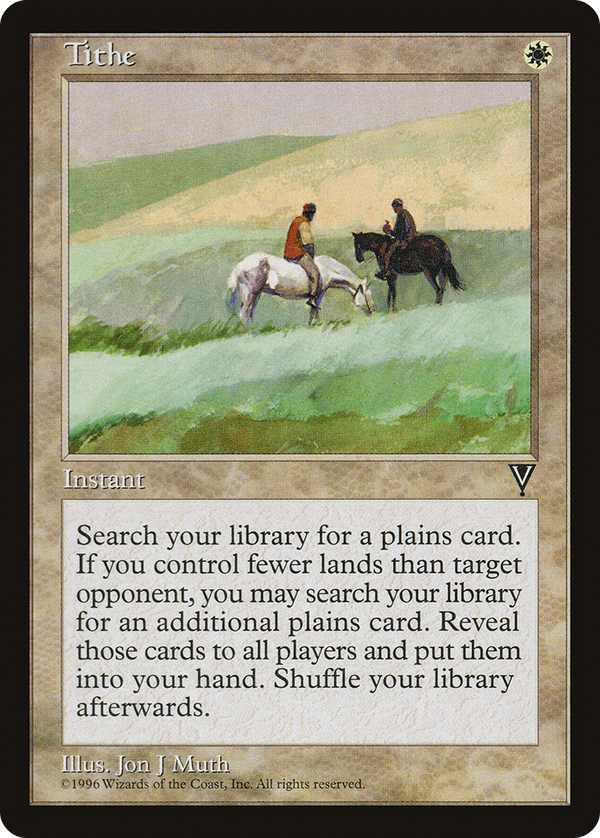
Tithe

White's answer to a structural problem of color identity: how do you give the most defensive color land access without handing it real acceleration? The design solution here is the catch-up clause. As a one-mana instant, this fetches a single Plains (any card with the Plains type, so dual lands and shocklands qualify, not just basics) and tucks it into your hand. The card only earns its second Plains when an opponent controls more lands than you, and that test is strictly binary: one land behind or ten, the reward is the same single extra card. That conditional is the entire balancing act. The card refuses to help the player already winning the land race and asks nothing in return except that you have fallen behind. Note what it does not do: the lands go to your hand, not the battlefield, so this is land-drop insurance and card advantage rather than ramp. You still pay for and play those lands yourself; the card guarantees you have one to play. Instant speed is the quiet sophistication here, letting you hold it until the land count actually tips rather than committing it on turn one and settling for the single-Plains mode. It is an early statement of a recurring white design principle: this color's resource generation should be contingent on being behind, not a reward for getting ahead. Land Tax was working the same vein; this compresses the idea into one cheap card that puts the land exactly where you want it.