Tiger-Seal

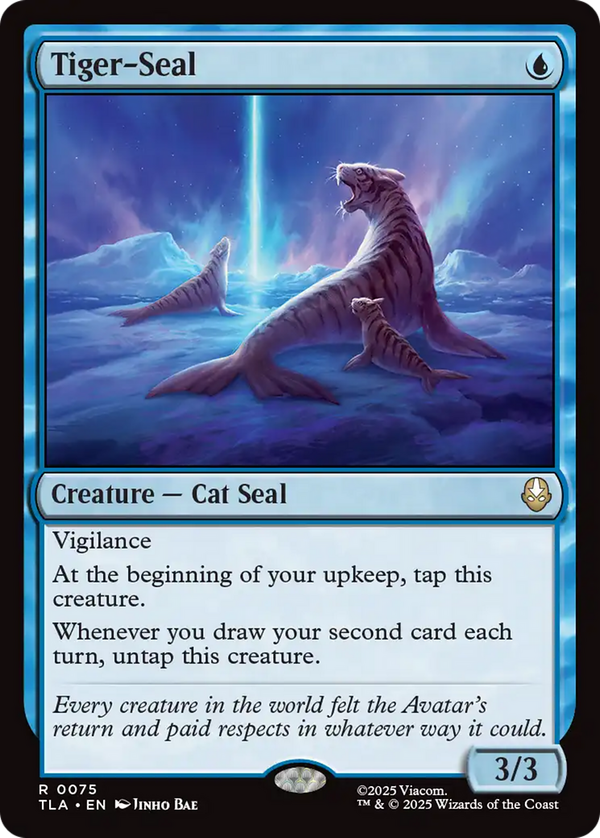
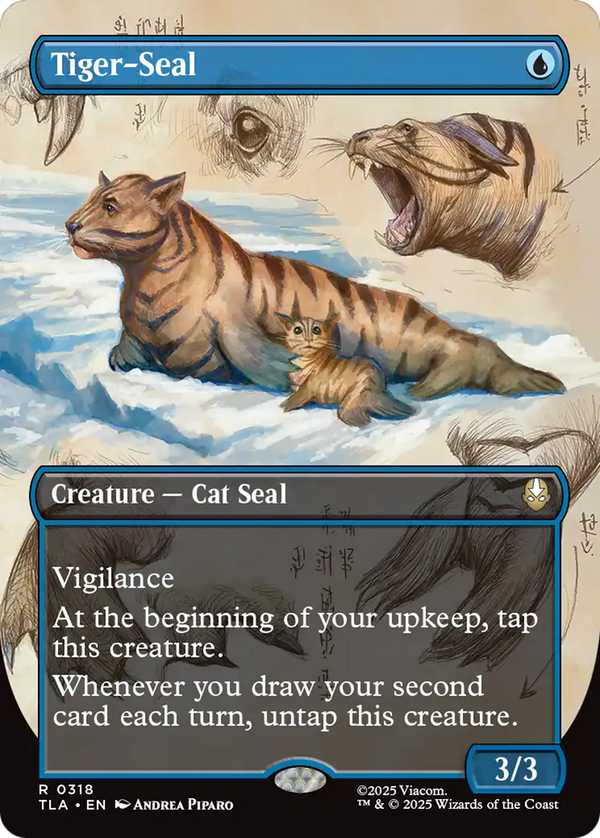
Blue does not get to keep a 3/3 for a single mana without a leash, and the leash here is a rhythm requirement rather than a static drawback. The creature comes down oversized and taps itself every upkeep, so it defends the turn it lands and then goes dormant unless you feed it: draw your second card, and it snaps upright, blocker and attacker restored. That single condition rewrites what the body is worth. In a deck that treats one extra card per turn as a floor (cantrips, draw engines, anything that reliably clears the second-draw bar), the tap-down is theoretical and you are running a 3/3 with vigilance for one mana. In a deck that draws exactly one card a turn, you are running a 3/3 that can only ever block once and then loiters. Vigilance is the clever knot in the middle: on the turns the creature is untapped, it attacks and still holds the fort, so the payoff is not merely "it is awake," it is "it is awake and doing two jobs at once." The design is less a stat-line-with-a-catch than a barometer for how hard a deck is churning through its library, its usefulness scaling directly with the exact metric blue already cares about most. It punishes durdling and rewards velocity, all without a single line of text about card advantage.