Tidal Visionary

Color-changing as a standalone effect is one of Magic's strangest levers: it does nothing until another card in play reads color. Protection, color-hosed removal, damage prevention keyed to a single color, lords that pump a chosen color: these are the cards that give a color-changer teeth. On its own, repainting a creature blue for a turn accomplishes exactly nothing, and the design bet here is that the surrounding cardpool will supply the context. A multicolor environment, where clashing color identities are the point, is precisely where that bet cashes. Because the effect comes off a tap symbol, it returns turn after turn: a recurring wrench you can aim where the board is most brittle. Recolor a blocker so it slips past an attacker's protection from white and takes the damage, flip a creature into a color your removal can finally name, or strip a defender of the color word a prevention shield depends on. It points at one creature, yours or the opponent's, which is the half players forget; painting your own attacker can dodge a color-conditional blocker just as readily. The 1/1 Merfolk Wizard body is almost incidental, a frame built to carry the tap symbol. What keeps the card alive across decades is that its function is parasitic on a permanent rules quirk: as long as protection and color-conditional effects exist, a cheap, repeatable way to rewrite a single creature's color stays relevant in the margins, waiting for the player who has read the board and found the one color word holding it together.
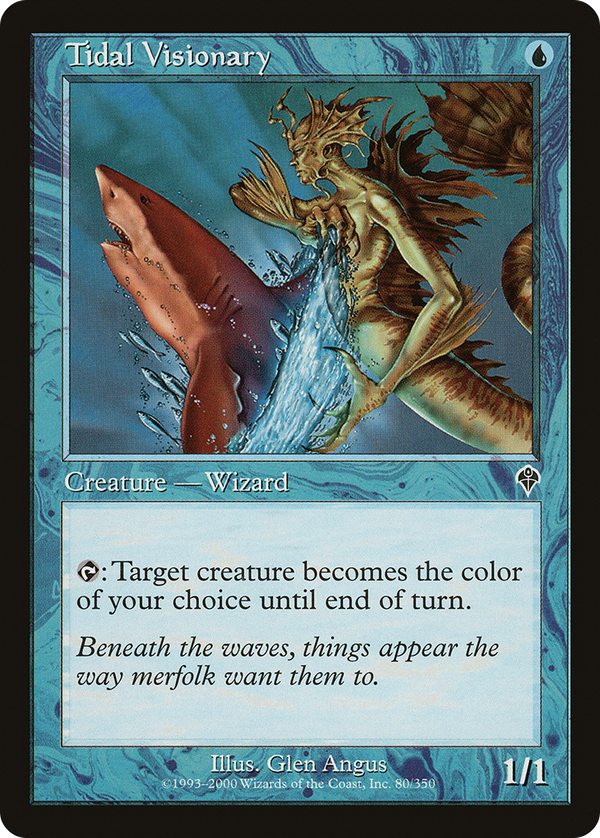
Rules text
 : Target creature becomes the color of your choice until end of turn.