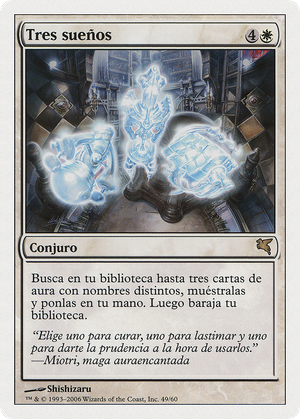
Three Dreams


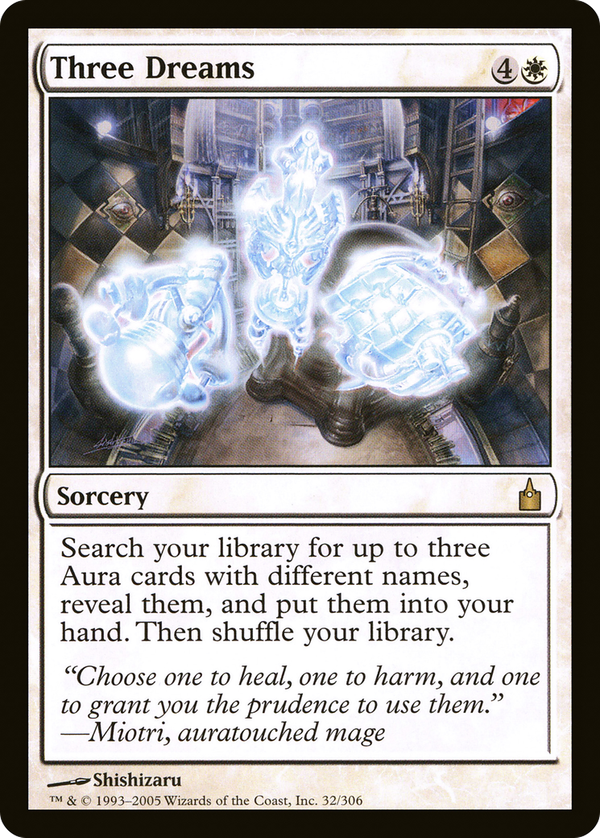
The card math reads like a windfall: spend one card, draw three, a clean three-for-one in raw count. But the tutor does nothing on the turn you cast it. Pulling three Auras at once still leaves you owing the mana, the cards, and the turns to land them on something that survives, and that tempo bill is what an Aura-voltron deck pays without flinching. The prohibition on duplicate names is the load-bearing clause: it cannot rake in three copies of a single buff, so it rewards a quiver of single-purpose enchantments where each piece answers a distinct question (one for evasion, one for protection, one to swing the size). Reveal, take, shuffle, and the next several turns arrive pre-loaded. The real tension lives where all that investment lands: stacking three Auras onto one creature is the all-in line a lone removal spell punishes hardest, so the deck wins or loses on whether it can convert a fistful of enchantments into a clock fast enough to outrun the answer. White has rarely had a cleaner on-demand way to assemble an Aura package, and the no-duplicates rule is what turns the search into a deckbuilding problem rather than a redundancy crutch: build a wide enough enchantment suite, and this fetches the right three for the board in front of you.