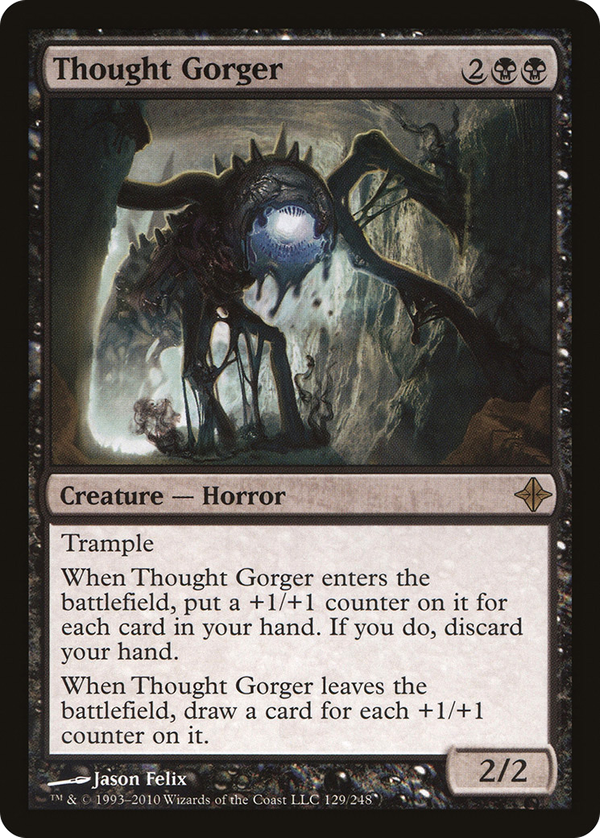
Thought Gorger


The genius here is in the two halves of the deal not matching up. The entry trigger trades your entire hand for stats, a brutal one-for-many at face value: dump six cards, get an 8/8 trampler, and own nothing. The departure trigger is the rebate. Because the counters convert back into cards when the creature leaves, the discard is never permanent loss so much as deferred draw, redeemable the moment something kills, bounces, sacrifices, or blinks the Horror. The whole strategic axis lives in that mismatch. Played fairly, it punishes you for going wide on cards; played as a combo piece, it becomes a hand-refill engine where the discard is a feature, because you intend to flicker or sacrifice it on your terms and reload everything you pitched, often at a profit if you stocked the counters high. The design quietly invites you to abuse the leaves-the-battlefield clause: anything that returns it to hand, exiles and recurs it, or sacrifices it for value reads the counters as a card-draw payout. Even a lethal blow lets a creature you were going to lose anyway hand back the resources it ate. It is a rare creature whose downside and upside are the same event viewed from opposite ends of its time on the battlefield, and the gap between those two ends is where the deckbuilding lives.