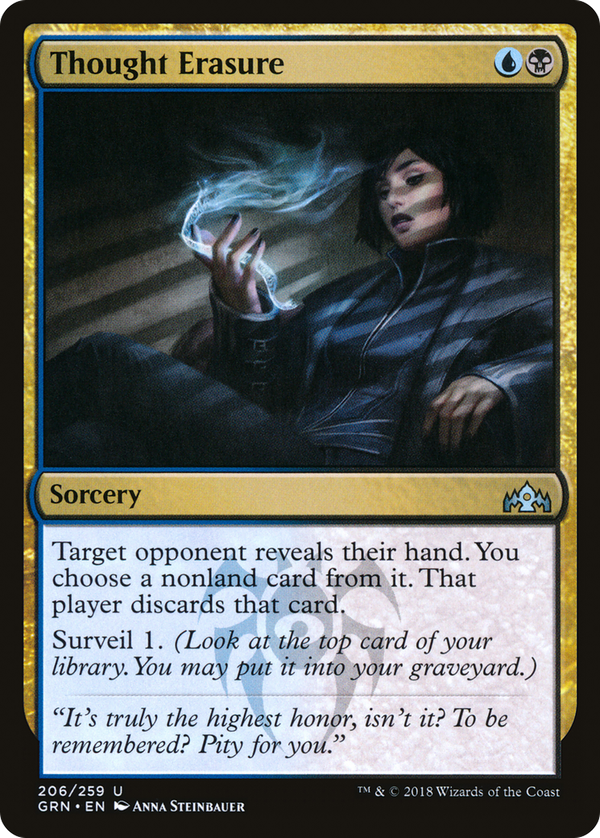
Thought Erasure


Discard's oldest structural weakness is the empty draw: once the opponent's grip is spent, or clogged with lands you cannot name, a spell like Duress or Thoughtseize becomes a blank you can do nothing with. This is discard with an insurance clause. The disruption half picks the opening exchange, reaching in to strip a real threat before it deploys, and the surveil half keeps the card live once that window closes. When the hand offers nothing worth taking, you still get to smooth your next draw and load the graveyard, so the card that would otherwise brick converts into setup. Surveil 1 is the quiet part that earns the slot: it feeds delve, flashback, and reanimation while filtering toward your own plan, which is why this pulls its weight in graveyard decks that cannot afford disruption that goes inert in the late game. The two-color cost and the two-mana investment buy that flexibility; the tradeoff against a one-mana single-color option is that you are paying up front to guarantee the spell always has a job. Neither clause is filler. The design turns on making the weaker half of any game state useful: take the card when there is one to take, dig for gas when there is not.