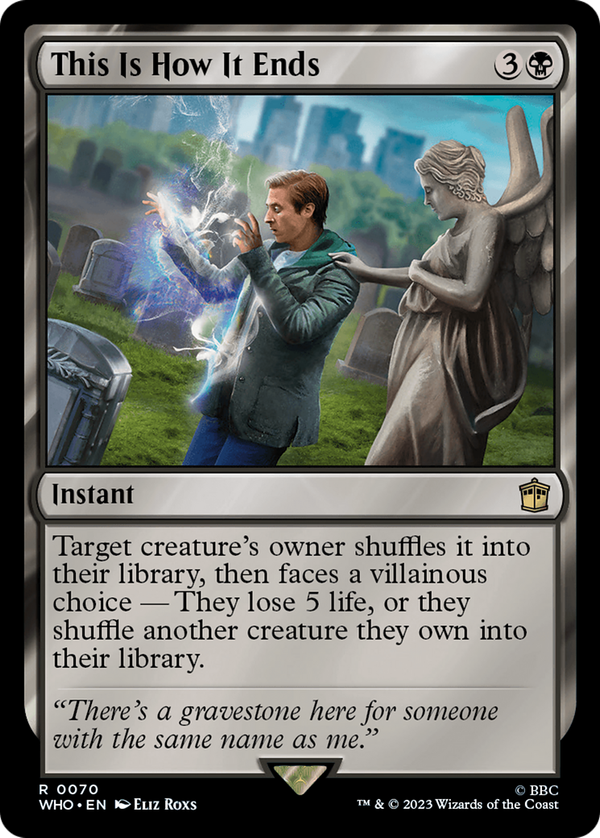
This Is How It Ends


Shuffling a creature into its owner's library, rather than destroying it, is the quiet upgrade here: black rarely gets to exile-adjacent removal that dodges graveyard recursion, and a card buried at a random depth is gone in a way a card in the yard is not. But four mana at instant speed for a one-for-one is a soft rate, and the design refunds that gap to the opponent as a fork: lose five life, or shuffle away a second creature. Neither branch is clean for the caster. The life-loss branch turns the spell into a chip toward a burn or aristocrats clock; the second-creature branch converts a one-for-one into a two-for-one, but only the opponent decides which. That is the wrinkle worth sitting with: the caster names the first target, then hands the resolution over, so the "value" mode is never yours to claim. Against a board with a single meaningful threat and nothing else worth burying, they pay the five and you have still traded a card for a card plus five points of face damage, which is not the removal you were hoping to cast. Against a deck top-heavy on creatures it cannot afford to lose, the second shuffle materializes. The branch resolves to the opponent's board and life total, not the caster's plan, which is exactly what keeps a shuffle-away instant from quietly outclassing the destroy effects it competes with.