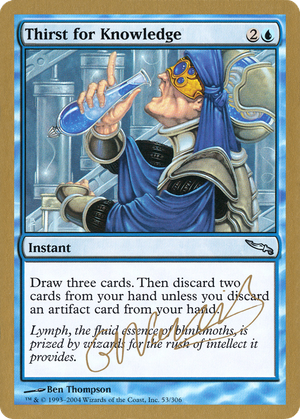
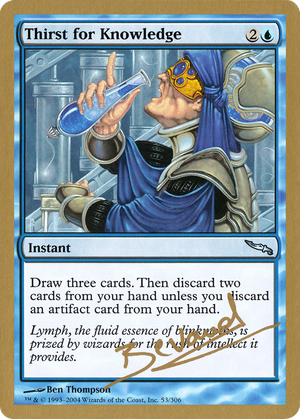
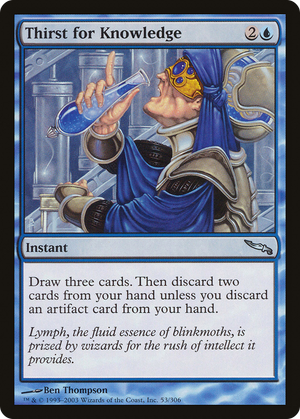
Thirst for Knowledge


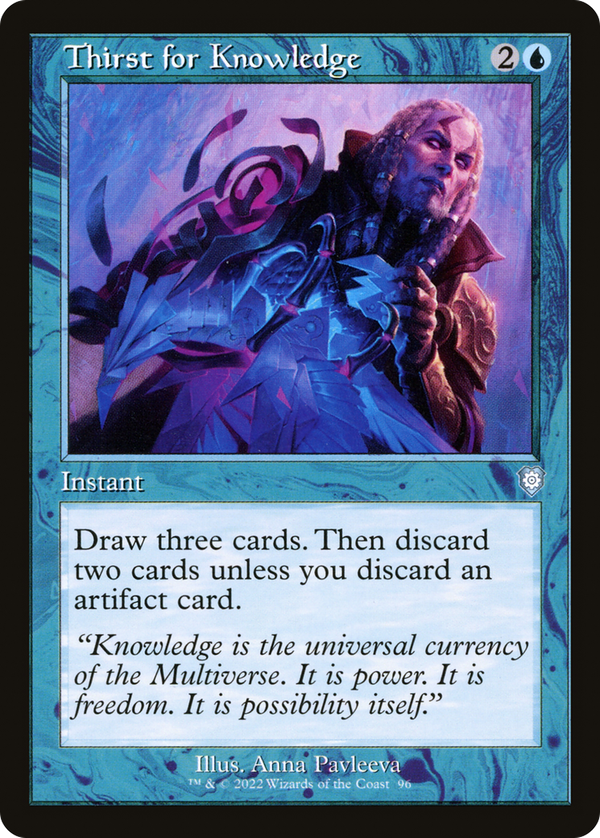
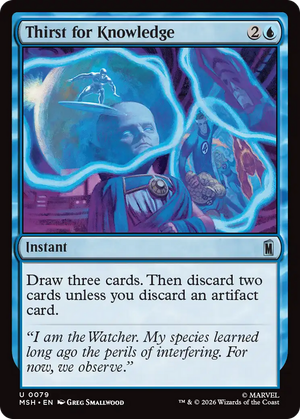
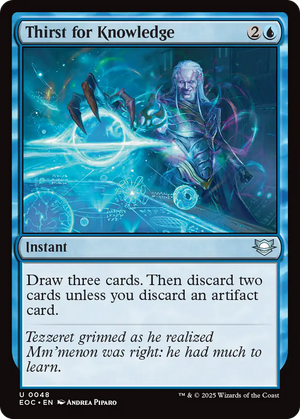
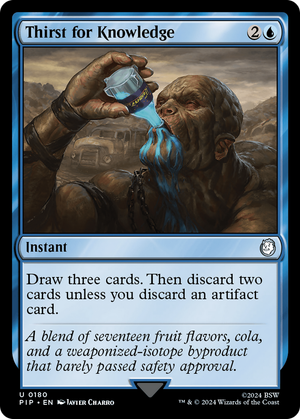
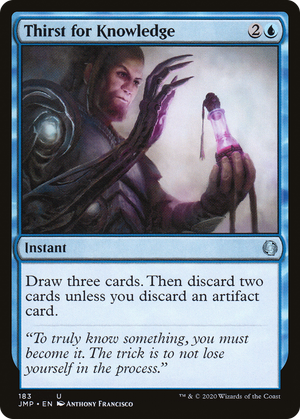
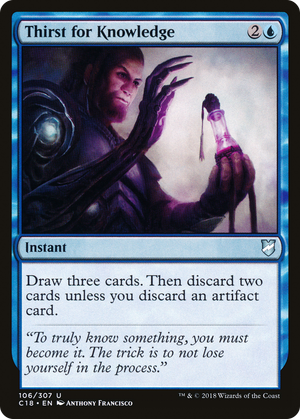
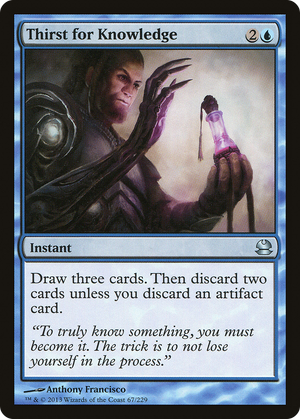
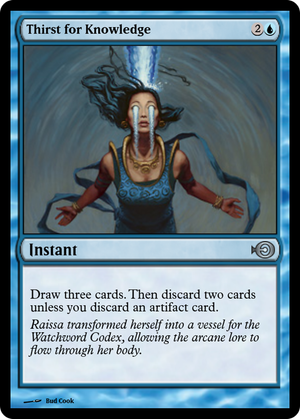
The exception clause is the whole design. Draw three, then pay two cards back unless you pitch an artifact, in which case you pay only one. The math is honest if you watch it: cast the spell (down one card), draw three (up two), discard one artifact (up one), so the artifact mode leaves you a single card ahead while keeping the two you most wanted to dig for. Discard the artifact and the card stops being a flat looter and becomes a real refill, and the elegance is that you choose: there is no penalty for holding no artifacts, only a bonus for holding them. That is the cleaner answer to a problem blue's draw spells keep posing, which is how to reward an artifact deck with card advantage without handing the same engine to every blue deck that wants generic filtering. Build around it and the forced discard becomes a feature, feeding reanimation or recursion rather than taxing you; ignore the theme and the spell collapses into a slightly steep three-mana dig. The instant timing earns more than the rate suggests, letting you hold mana for interaction and only commit to the refuel once the turn has nothing better to ask of you. Among the early-era filtering spells that tried to pay off artifact density, this is the one whose conditional cost is calibrated tightly enough that it has kept finding homes long after most of its contemporaries faded.