Thirst


Pacifism that you have to keep buying. Tapping the creature on entry and locking it down is a clean way to neutralize a single attacker or blocker, but the recurring upkeep payment turns the Aura into a meter running against you every turn: hold the lock and you bleed a blue mana you would rather spend elsewhere, or let it lapse and hand the creature back. That friction distinguishes it from the permanent-disable line of removal that simply sticks a creature to the table for free, no strings attached. The structural cost is also the structural risk; killing the enchanted creature, bouncing it, or removing the Aura itself all stop the drain, so the controller is rarely paying full freight for long. What you get is an early experiment in soft, taxed control: an answer that does not commit, that asks you to keep choosing whether the lock is still worth its keep. The mechanic recurs throughout the era's blue toolbox, where tempo was often rented rather than bought outright, and the design idea (a removal-adjacent effect you must continually re-purchase) is the same logic later upkeep-cost permanents would refine into cleaner shapes.
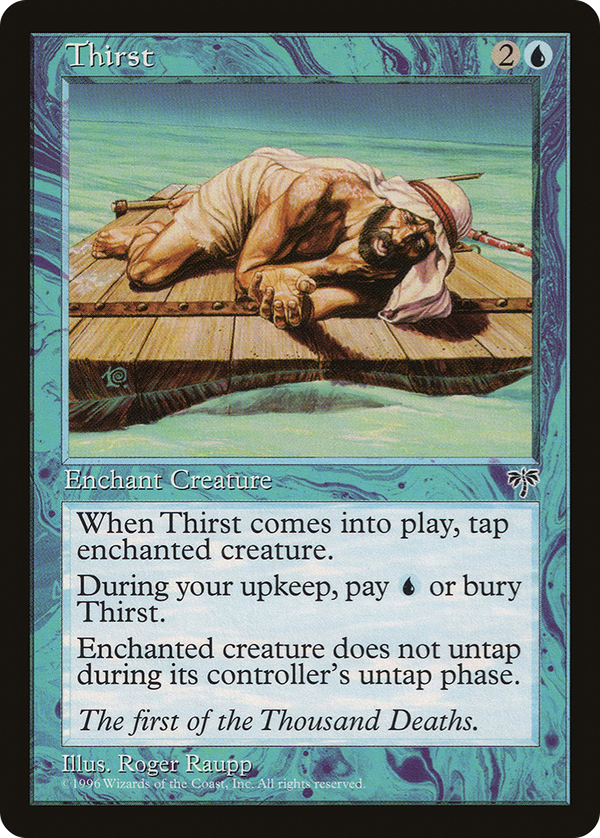
Rules text
.