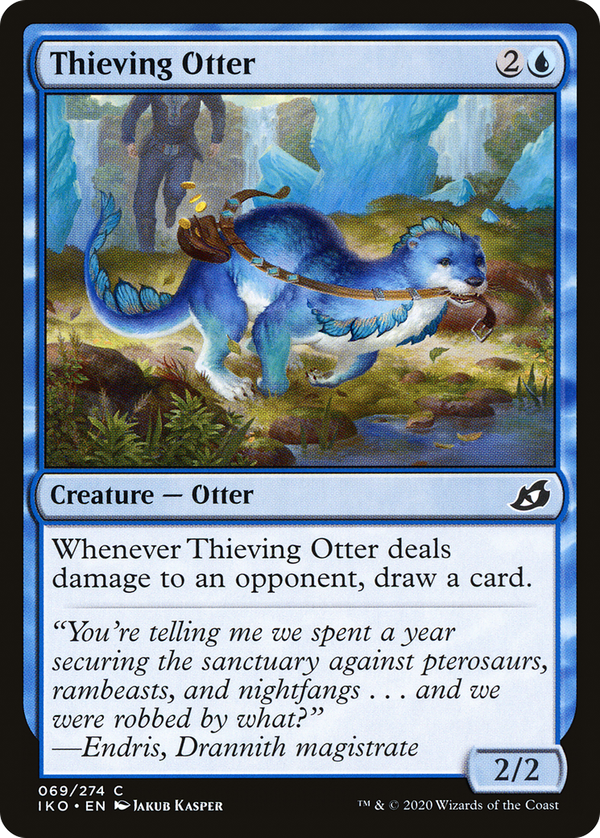
Thieving Otter


The whole card is the gap between the ability and the body. The trigger belongs to a well-worn lineage of blue tempo creatures that convert a small unanswered attacker into a card-per-turn engine, the reward compounding every turn the defender declines to block or trade. But the frame promises nothing to guarantee the connection: no evasion, no menace, no unblockable clause, just a 2/2 that dies to almost anything the opponent points at it. That absence is not an oversight; it is the design. Because the damage trigger pays out only on damage to a player, never to a blocker, a single trade erases the engine outright, which pushes the deck around it away from raw stats and toward the spells that make blocking the worse choice: burn to clear the path, bounce to open a lane, pump to win a fight the body could not win alone. The Otter identity leans hard into that posture, cheap instants and sorceries doing the combat math the creature refuses to do for itself, so the spell suite and the attacker reinforce each other turn over turn. The strategic tension sits in a single line: the ability offers a snowball, the body offers a liability, and the distance between them is filled entirely by what you bring to bend combat your way.