Theft of Dreams


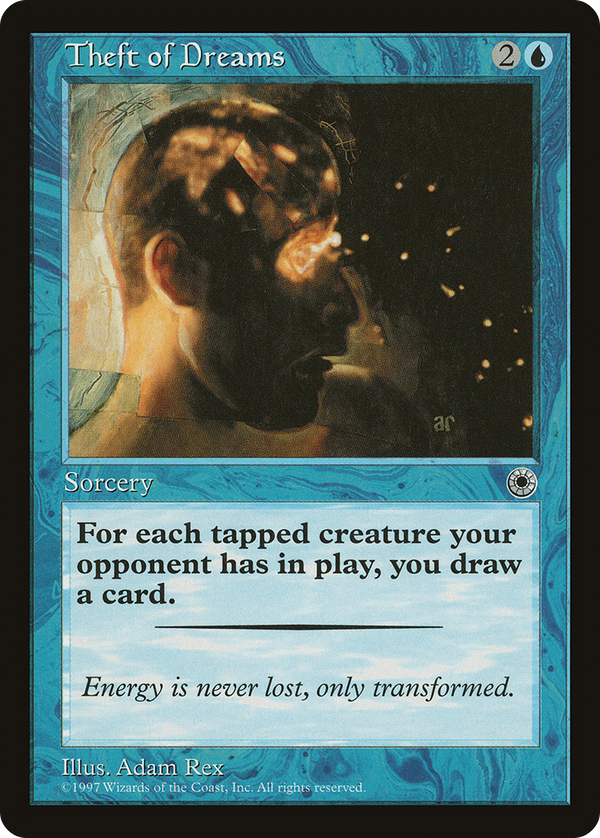
A draw spell that bills its yield to the opponent's tempo decisions, which is a strange and revealing way to build a blue card-draw effect. The payout scales with how many of their creatures are tapped: after a big attack, after they crack down on you with activated abilities, after they tap out for mana. The design hands you a spell whose ceiling the opponent sets, and the floor is grim (cast it into an untapped board and you draw nothing): a conditional reward that puts the lesson of reading board state before committing mana directly into the price of the card. Because it is a sorcery, the patience it asks for is structural: you cannot snap it off during their attack, so the windmill turn waits until you have priority again, once their creatures are still tapped down and your timing window has opened. The catch is that it cares about the opponent's creatures specifically, so it does nothing against a noncreature deck and nothing on an empty board, anchoring it to a reactive posture rather than a proactive engine. As a snapshot of a now-vanished design philosophy, where a teachable mechanical lesson outranked raw efficiency, it is more interesting than its rate: a card that makes you wait, and pays you for waiting, in a slot most decks would rather spend on something unconditional.