The Water Crystal


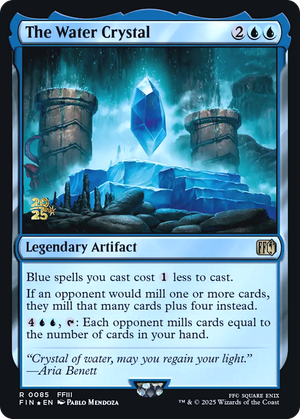
Two designs share this shell, and only one of them tells you what the card is really about. The cost reducer on top is the honest half: a static discount on every blue spell you cast, the kind of engine effect that lets a control shell resolve two spells where it planned on one. The mill effects aim somewhere stranger. The plus-four replacement only fires when an opponent would actually mill, so it does nothing until you supply a source of opponent mill to key off, which in practice means your own tap ability feeding it. That activated ability is the real closer: an asymmetrical mill that hits each opponent for your hand size, which in a durdly blue deck sitting on cards can end games once it stacks with the plus-four amplifier. The tension is that these two identities pull opposite directions. The cost reducer wants you empty-handed and casting, dumping resources onto the stack; the mill ability wants you full, hoarding cards to make each activation bite. The card refuses to resolve that friction, and the refusal is what defines it: a mill payoff that also happens to be a cost engine, asking you to decide which axis your deck actually lives on and taxing you for wanting both. Blue mill as a wincon has always been a fragile, dedicated build; this bundles enabler and payoff into one legendary permanent and lets the deck choose how greedy to be.
Rules text
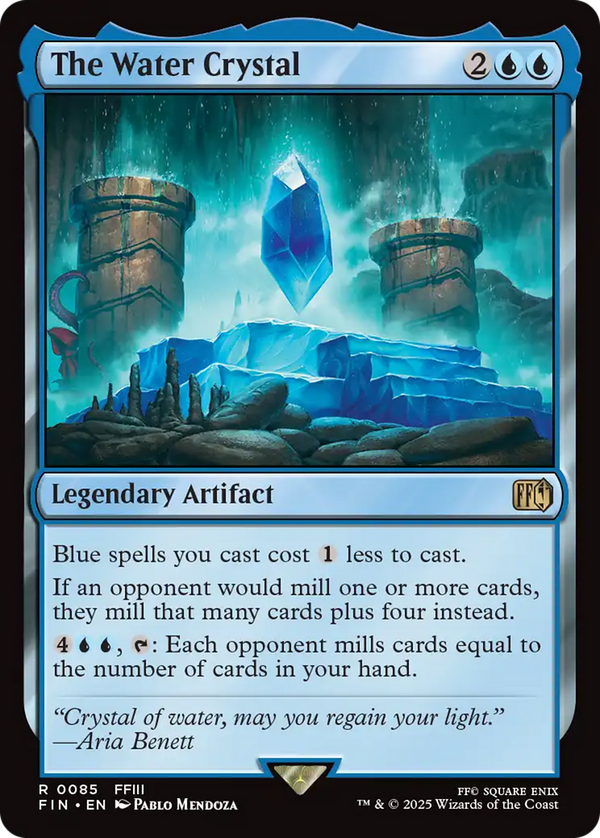
 less to cast.
If an opponent would mill one or more cards, they mill that many cards plus four instead.
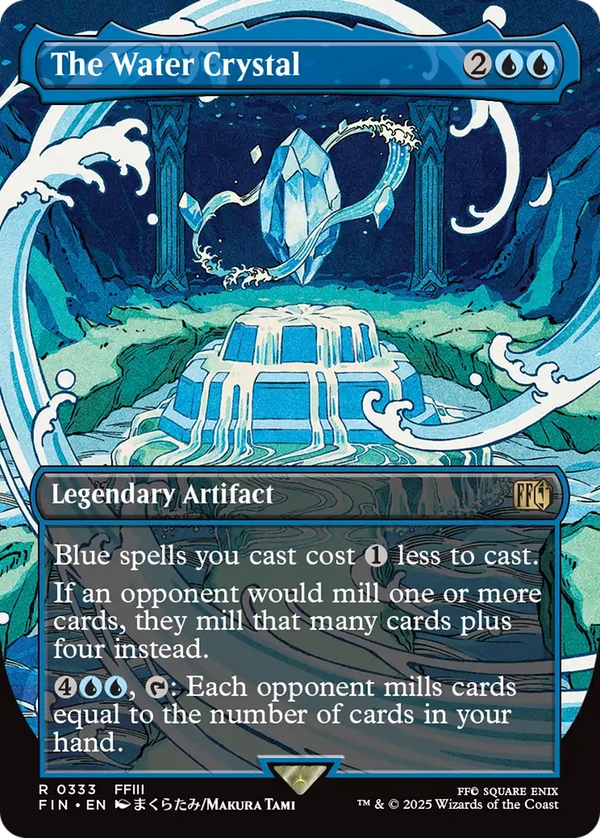
less to cast.
If an opponent would mill one or more cards, they mill that many cards plus four instead.
 ,
,  : Each opponent mills cards equal to the number of cards in your hand.