The Hunter Maze
A tapland that fixes for green and, once the board no longer needs it, converts into a fresh card: that is the whole transaction, and it descends from a lineage Magic has been refining since the first cycling lands let a mana source double as insurance against flood. The nearer cousins are the horizon lands and the Memorial cycle, lands whose late-game job is to stop being dead draws by turning into gas. What sets this one's shape is the price of the cantrip: two mana plus the tap plus the land itself, which parks the draw firmly in the midgame rather than treating it as a free trade-up. It enters tapped, so you pay a tempo tax up front for the option to sacrifice it later; the early game is where it costs you, the late game is where it pays. Green is the color least starved for card advantage, which frames this as flood insurance more than an engine: a green source that stops being a dead draw the moment the board stabilizes. It asks nothing of the deck around it beyond another green source and a spare mana, which is the point. It occupies a green mana slot and earns its keep there twice, first as fixing, then as the land you are glad to give up when the game runs long.
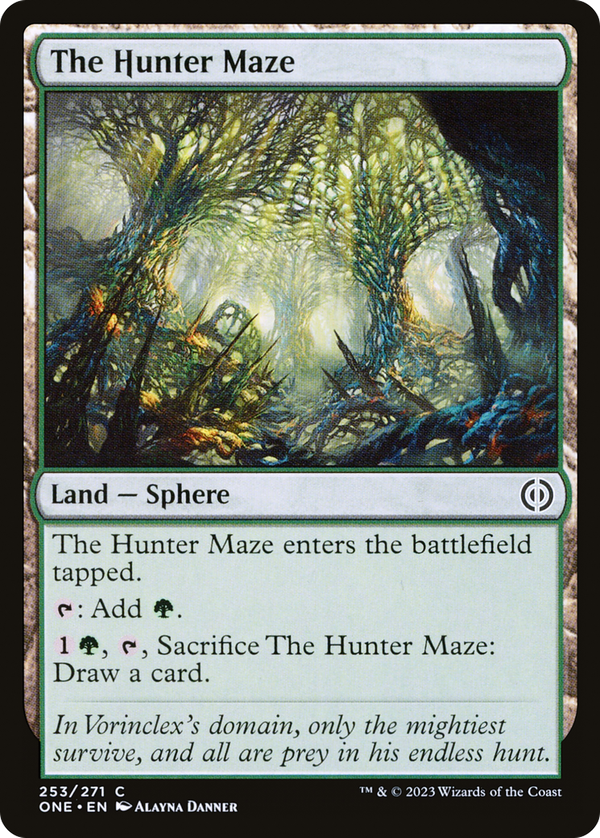
Rules text
 : Add
: Add  .
.
 , , Sacrifice this land: Draw a card.