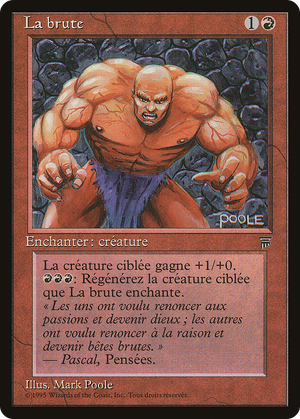
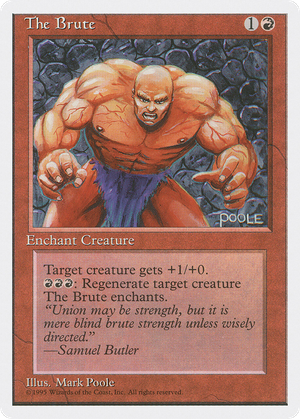
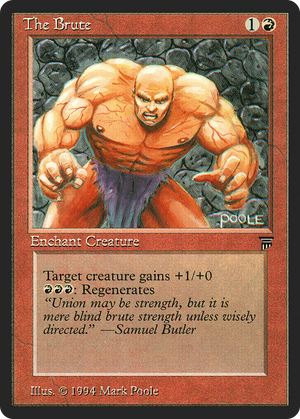
The Brute


Aura design from the game's first years tells you a lot about where Wizards thought the format was heading, and where it actually went. The pitch is a buff stapled to a regeneration outlet on the same permanent, paid for in two installments: a cheap up-front cost to suit the creature up, and a heavy triple-red activation to keep it alive through removal. The math reads generously until you sit with it. Triple red on a regenerate ability, in an era when fixing was a Mox or a basic, meant the regeneration clause was a mono-red promise more than a working line of defense. And the Aura chassis is the structural tax: the card is card disadvantage the moment the creature dies before you can regenerate it, which is exactly what regeneration is supposed to prevent. Later red Auras (Goblin War Paint, Madcap Skills, Brute Force as a pseudo-instant alternative) abandoned the regenerate-and-pump pairing entirely, splitting the two effects onto different cards because the Aura template cannot carry both at a reasonable rate. What remains is a record of how early design approached creature protection: bolt a toolkit onto the creature itself, and trust the player to find the mana. The game moved past that thesis quickly, and The Brute has lived in the binder ever since.
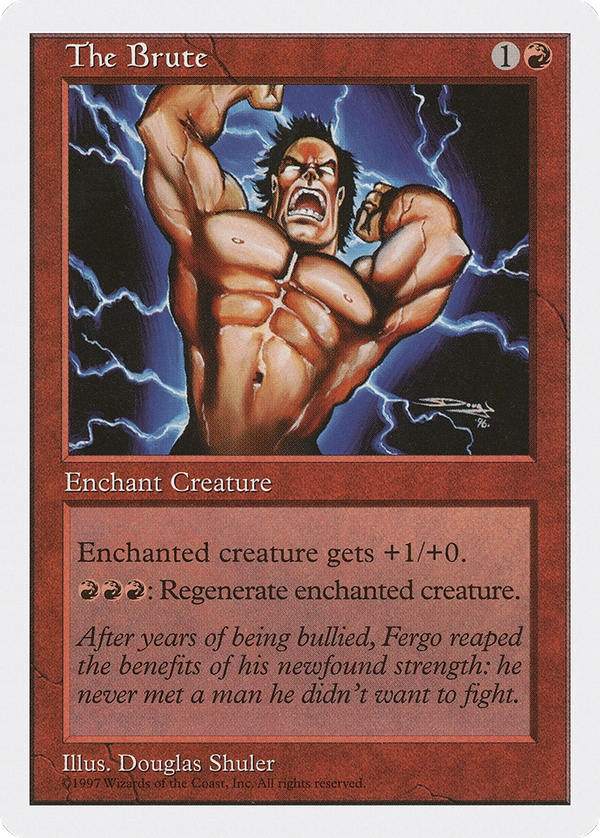
Rules text
: Regenerate enchanted creature.