Terrus Wurm


The body and the graveyard ability are priced to be used in sequence, not in tandem. Seven mana buys a 5/5 with no evasion and no relevant text: a deliberately blank top-end beater meant to die and become fuel. The real expense comes later, a second to cash the card out of the yard and dump five +1/+1 counters onto a creature, at sorcery speed, with no ambush and no blowout. That is the whole mechanism of scavenge: cast a creature once for its body, then redeem it a second time as a permanent buff after it dies. The friction is that both halves cost full freight, so the play asks for fourteen mana across two turns to net a 5/5 attacker and a big counter pile. The counters being permanent is what does the balancing work, since they survive the removal that would otherwise answer the original creature, but a 5/5 with no protection rarely earns fourteen total mana in a deck with anything better to do. This sits at the low end of the scavenge cycle: the mechanic's core idea (convert a dead body into a stat boost) realized at common-grade power, with a body and a price that cap the ceiling. It exists to show what scavenge does at its most basic, not to be the card that makes the mechanic dangerous.
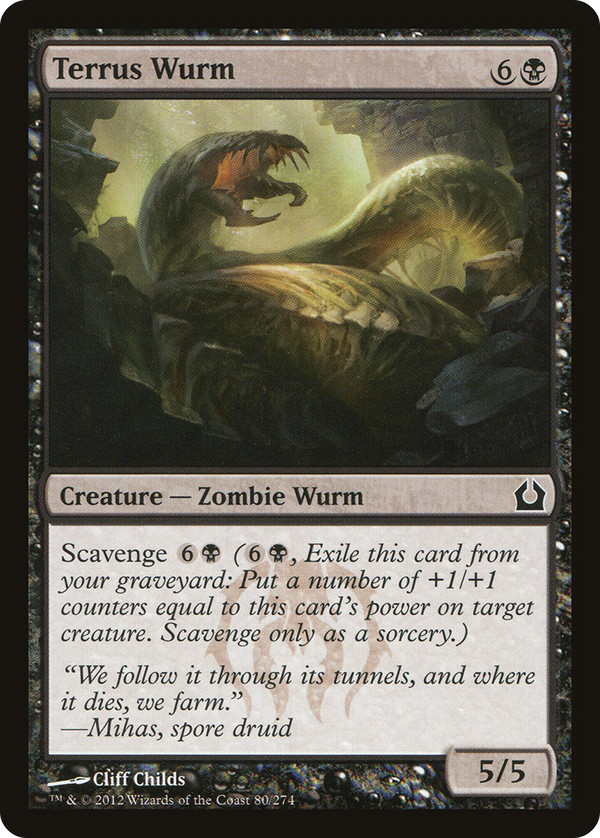
Rules text
(, Exile this card from your graveyard: Put a number of +1/+1 counters equal to this card's power on target creature. Scavenge only as a sorcery.)