Temur Tawnyback



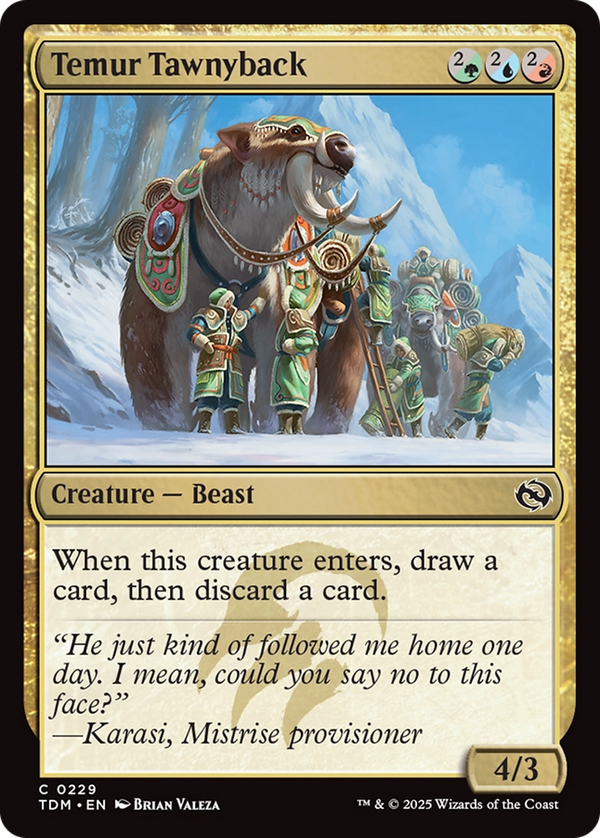
A 4/3 for six that loots itself on arrival is a rate nobody plays for the beater; the body is the excuse, and the trigger is the argument. That draw-then-discard order does more work than it looks: because you draw before you bin, the card is best when your hand already holds something you would rather have in the graveyard, turning a live-but-unneeded spell into fuel. Crucially, looting is card-neutral, not card-positive: you end the turn with the same hand size you started, so this is filtering, not advantage. That points squarely at the decks where the discard is worth as much as the draw: a reanimation shell pitching a fat target, a spells deck digging toward its payoff, a delirium or threshold engine feeding its own yard. The loot fires once, on entry, so the card leans on flicker, recursion, or simply holding it until the pitch you want is in hand. Each pip is a hybrid symbol that accepts either its wedge color or a two-generic surcharge, so any deck willing to overpay can cast it, though it costs the least when the three-color wedge pays each pip in kind; the flexibility widens the door without changing who was meant to walk through it. Cast into a graveyard build, it is a threat and an engine folded into one tempo-neutral play; cast blind, it is an overpriced body that trades one unwanted card for a shot at a better one.