Temple of Deceit
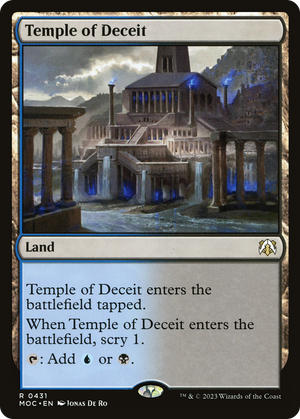
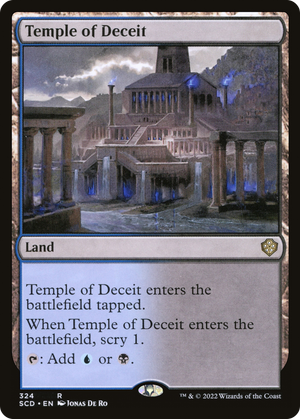
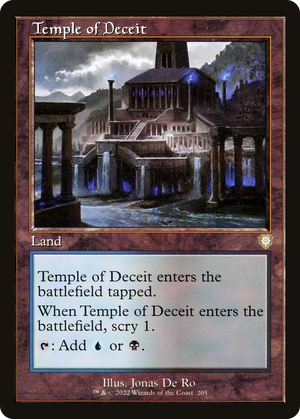
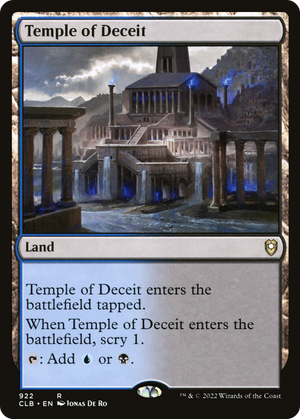
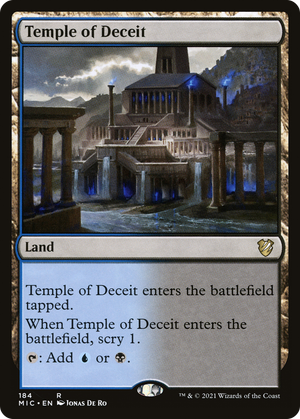
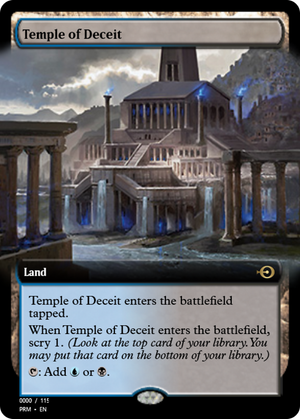
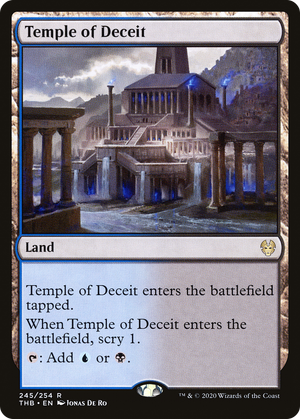
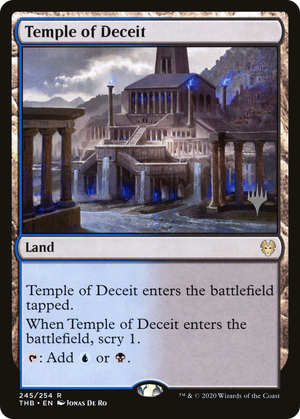
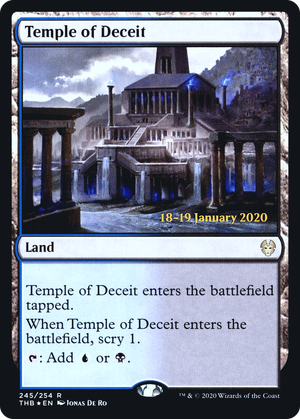
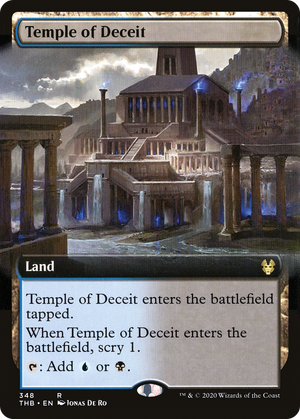
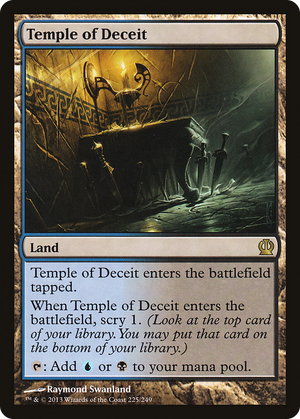
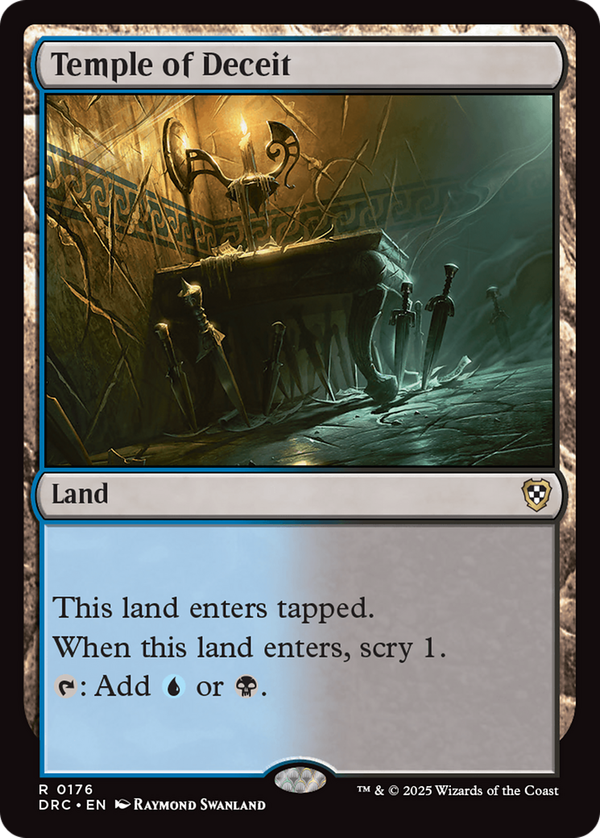
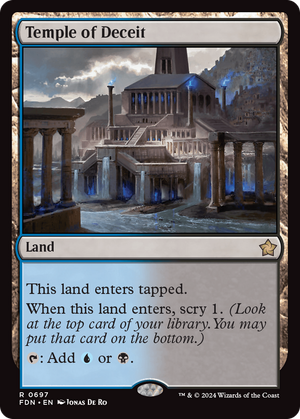
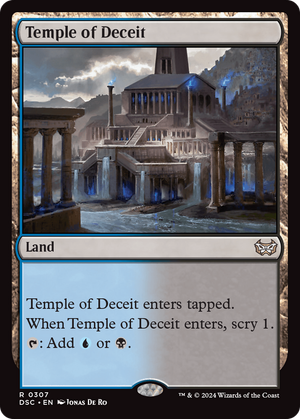
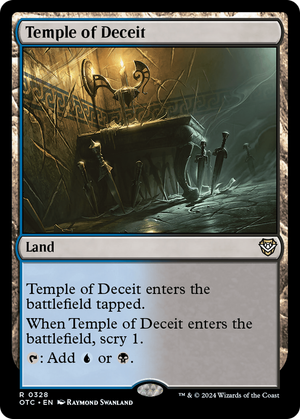
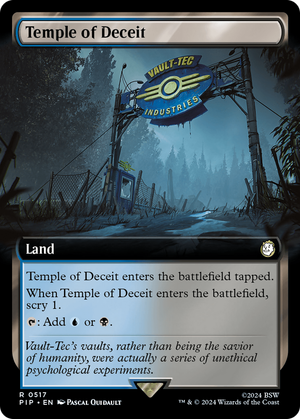
The trade is fixed and well understood: you give up turn-one tempo to enter tapped, and in exchange you get fixing for two colors plus a scry that smooths your next draw. That scry is the part doing the real work. A tapped dual is a known quantity, and on its own it is a tax most decks would rather not pay; the scry 1 on arrival is what turns the painless duals into something a control or midrange deck actively wants, because it converts the tempo you lose into a small but real card-quality gain. It rewards playing the land early, when there's room in your curve to absorb the tapped turn and the scry can dig toward a land or a key spell, rather than dropping it late when the look matters least. The Dimir-colored member of the scry-land cycle sits in the color pair that values the dig most: blue and black are the colors that hoard answers and want to find the right one, and a free filter stapled to a fixing land is a quiet structural advantage for decks built to play the long game. It is fixing that apologizes for its own drawback, and the apology happens to be exactly what these colors crave.
Rules text
 : Add
: Add  or
or  .
.Format Status
More formatsFewer formats
Other printings
- Foundations#697
- Duskmourn: House of Horror Commander#307
- Outlaws of Thunder Junction Commander#328
- Fallout#517
- Fallout#303
- Fallout#1045
- Fallout#831
- Doctor Who#1115
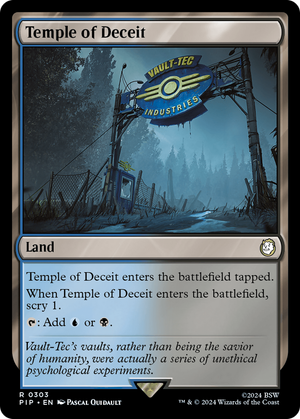
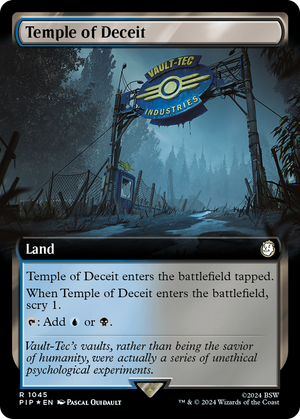
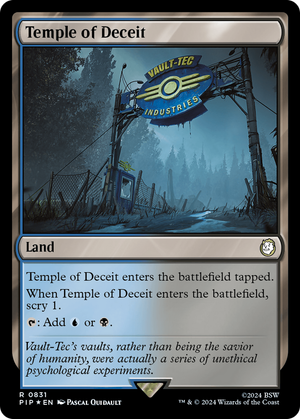
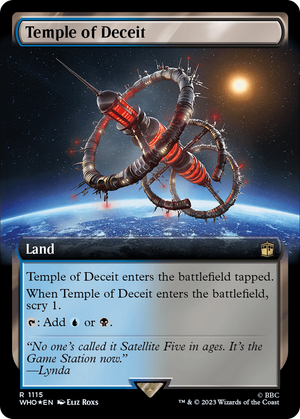
Show all 23 other printings
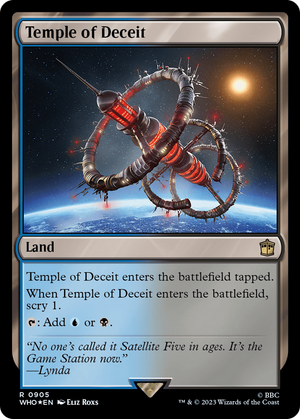
- Doctor Who#905
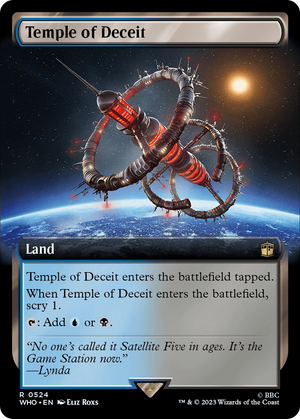
- Doctor Who#524
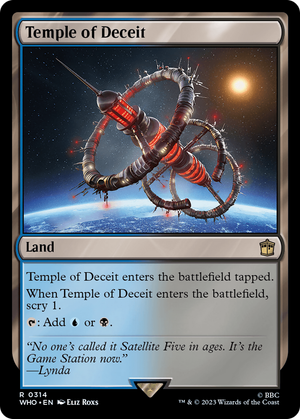
- Doctor Who#314
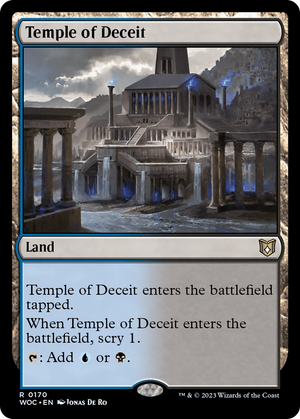
- Wilds of Eldraine Commander#170
- March of the Machine Commander#431
- Starter Commander Decks#324
- The Brothers' War Commander#205
- Commander Legends: Battle for Baldur's Gate#922
- Midnight Hunt Commander#184
- Magic Online Promos#79873
- Theros Beyond Death#245
- Theros Beyond Death Promos#245p
- Theros Beyond Death Promos#245s
- Theros Beyond Death#348
- Theros#225