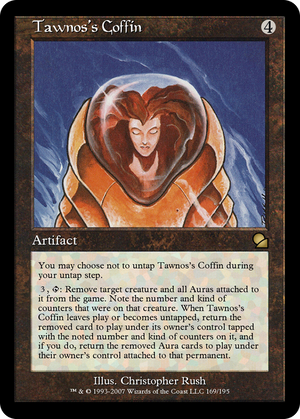
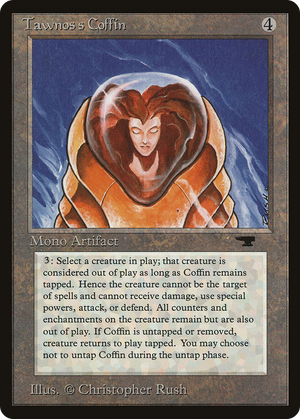
Tawnos's Coffin

Few cards from the early game encode as much rules-engine ambition as this one. Look at what the text is actually tracking: not just a creature, but the Auras attached to it, the number and kind of counters on it, and the binding between the exiled creature and its exiled attachments so they reattach correctly on return. In 1994 this was effectively a custom zone, a small database the card maintained by hand because the comprehensive rules had not yet been written to do it for you. The optional-untap clause turns the effect into a sustained blink: spend three and tap to remove a creature, then choose to keep it gone indefinitely by leaving the artifact tapped, accepting that any disturbance (an untap effect, a destroy) sends the prisoner back. That is the design conversation Oblivion Ring and its descendants would eventually formalize, but here the mechanism is laid bare, with the player as bookkeeper. The counter-noting clause in particular reads like a designer reaching for a tool the game did not yet have: a way to preserve creature state across zones, decades before persist, undying, or the modern templating around "the exiled card" made such effects routine. It is a card built by someone who saw where Magic's rules engine needed to go and wrote the patch directly onto the cardboard.
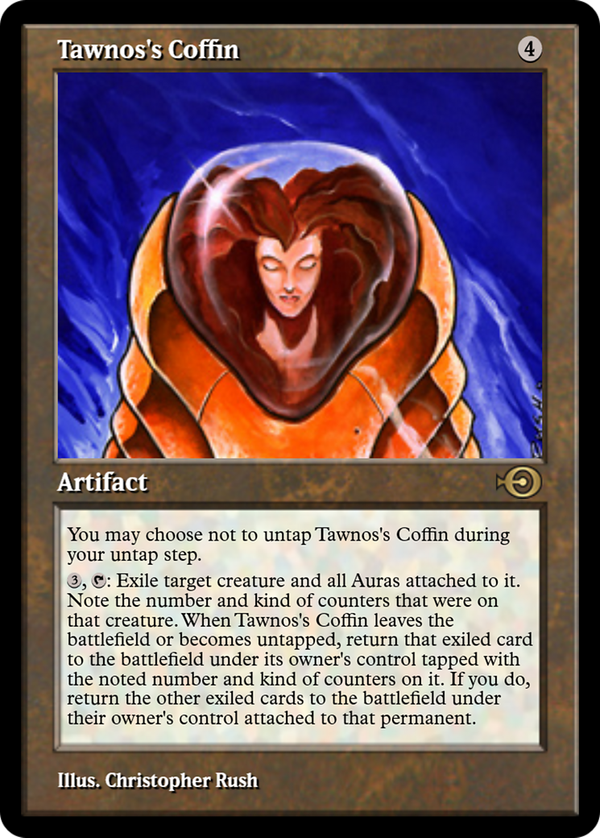
Rules text
 ,
,  : Exile target creature and all Auras attached to it. Note the number and kind of counters that were on that creature. When this artifact leaves the battlefield or becomes untapped, return that exiled card to the battlefield under its owner's control tapped with the noted number and kind of counters on it. If you do, return the other exiled cards to the battlefield under their owner's control attached to that permanent.