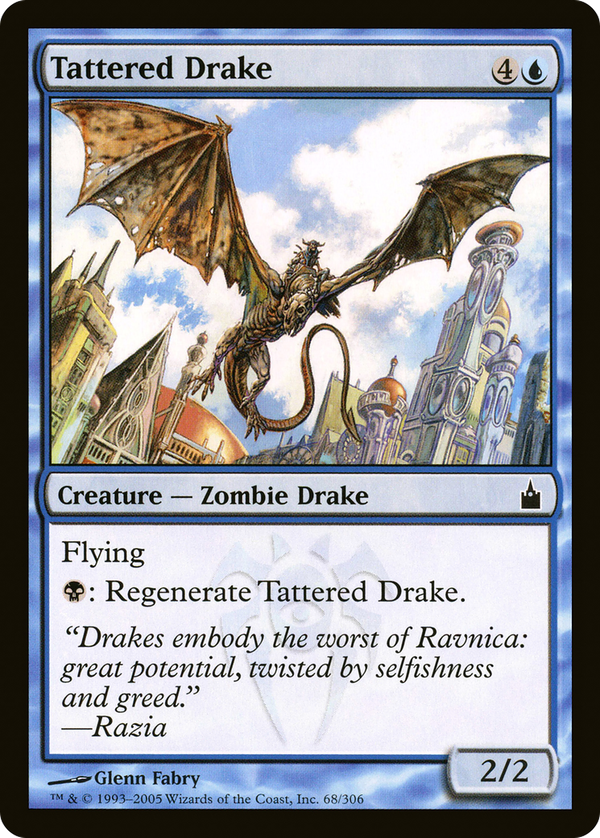
Tattered Drake


The whole design lives in the gap between casting cost and activation: a mono-blue evasive body whose only trick demands black mana to keep it alive. That split is a deliberate two-color nudge toward Dimir, the blue-black pairing where the off-color regeneration shield is something you can actually afford, because a black source is already on the table to fund it. The regeneration is purely insurance against destruction, which is the point worth getting right: paying the  replaces a lethal destroy event with a fresh creature, so it shrugs off combat damage and burn that meets or exceeds the body's toughness. Burn that falls short does nothing anyway, so the shield earns its keep specifically against effects that would otherwise kill the flyer outright, keeping a small evasive threat in the air through a stall as long as you can spend one black source each turn. It comes from an era when even a modest flying body was expected to carry a real cost, and the regeneration was never an engine: it is a survival button bolted onto an unremarkable creature, a recurring shield rather than anything that snowballs. What the card represents is the period's habit of writing a color-pair commitment directly into a creature's abilities, a blue spell whose only defense is black-mana-gated, built to reward players already settled into both colors rather than anyone hoping to splash it.
Rules text
: Regenerate this creature.