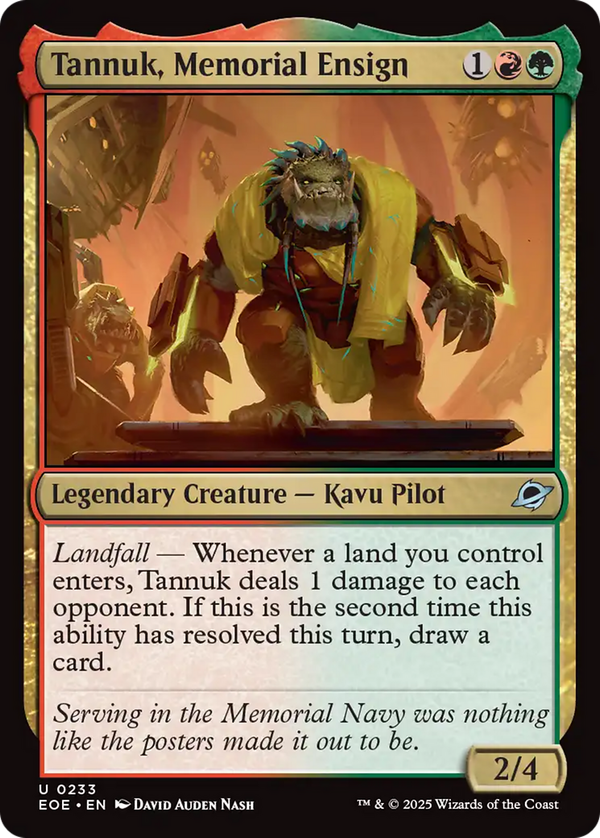
Tannuk, Memorial Ensign



Most landfall payoffs treat every land drop as identical: one trigger, one reward, and the deck's ceiling is just how many lands you can jam onto the battlefield. The second-resolution clause here bends that curve upward. The first land each turn pings each opponent for a point; the one that resolves second adds a card to the pile. That single conditional is what turns fetchlands, extra-land-drop effects, and land-bounce loops from marginal upgrades into the actual plan, because the payoff spikes on the turns you hit two entries. The body is built to survive the setup: a 2/4 walls the early aggression a low-to-the-ground lands deck is otherwise soft to, and toughness matters more than power because this line wins by grinding, not by swinging. It makes a resource you were spending anyway (land drops) do two jobs at once, reach and card advantage, while asking you to sequence carefully so the second trigger actually lands. Gating the better half behind doubling up answers the oldest problem in landfall design, diminishing returns from a single land per turn: instead of padding the deck with an inflated land count and hoping your draws cooperate, the card rewards a build that manufactures land entries on purpose.