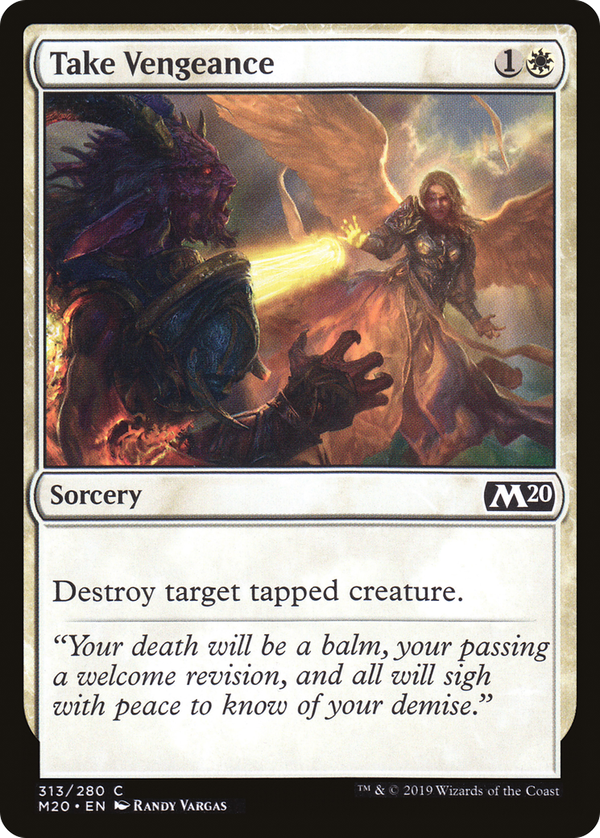
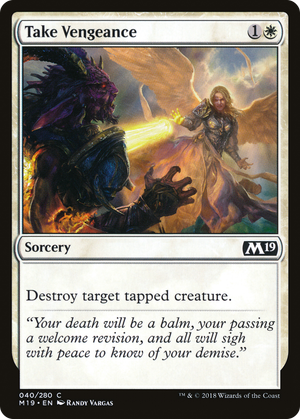
Take Vengeance


The condition does all the design work here: the creature has to be tapped. That single clause is what keeps a clean two-mana unconditional kill out of the format, and it dictates exactly when the spell is good. Against an aggressive board it is dead on the turn it matters most, because untapped attackers and blockers shrug it off. Where it earns its keep is the morning after combat: the creature that swung in is now lying flat, and white gets to answer the thing that just hit it without paying the premium that no-strings removal commands. It is a punish-the-attack design rather than a proactive answer, closer in spirit to the old white tradition of rewarding patient defense (Reprisal cared about toughness, Condemn about creatures already in the red zone) than to the catch-all kill spells white usually has to trade restrictions for. The same dependency cuts both ways for the caster: tapping is something you can manufacture, so anything that forces a creature to tap, or simply waiting for a vigilance-less attacker, turns a conditional spell into a reliable one. That is the line this card draws. It is removal you spend planning around the combat step rather than holding up at instant speed, and the gap between those two modes accounts for the discount.