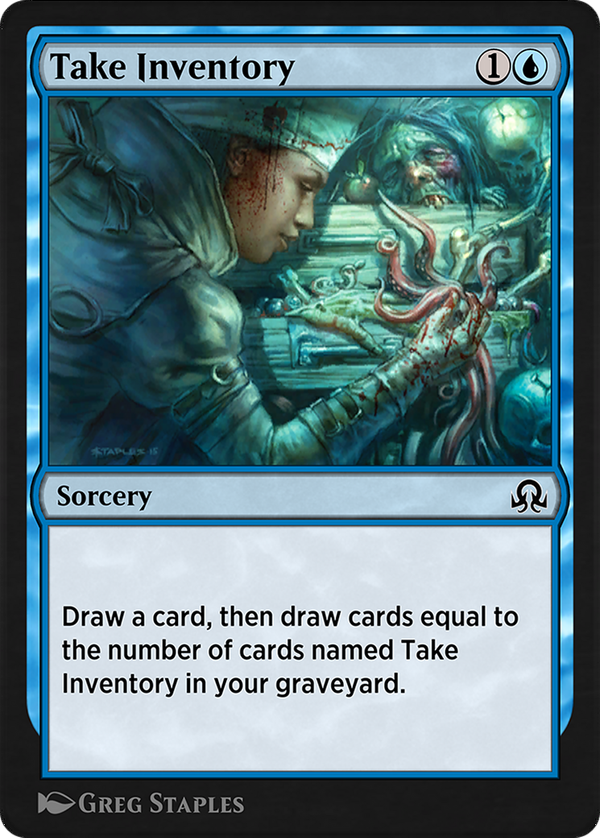
Take Inventory


The self-referential clause is doing all the design work: each copy already in your graveyard makes the next one draw wider, so the first cast cantrips, the second draws two, and by the third or fourth you are stacking value off a spell that started as the most replaceable card in the deck. This is the Accumulated Knowledge lineage with cleaner templating, the same scale-by-graveyard-count engine wearing newer clothes. The scaling is deliberately back-loaded and lossy: early copies are weak, you have to survive long enough to flood the yard, and any graveyard exile resets the count to zero. But the count is the only thing the spell reads, and that opens a second deckbuilding axis. Because it checks copies in the graveyard rather than copies you cast, a self-mill or discard outlet can seed the yard ahead of the draw, so a deck willing to pitch one to a Faithless Looting or grind one under a mill effect turns the first cast it actually makes into a two- or three-card draw. That is the real wrinkle: the patience tax is dodgeable if you spend other resources filling the graveyard for free. Built straight, it rewards running out copies in sequence; built around a yard engine, it rewards setup. Either way it is a slow-game payoff that quietly compounds the longer the game runs.