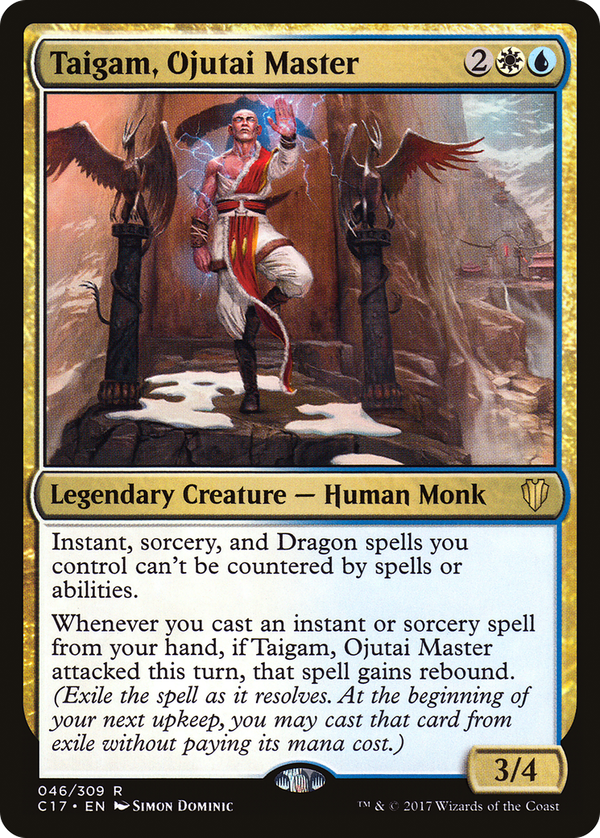
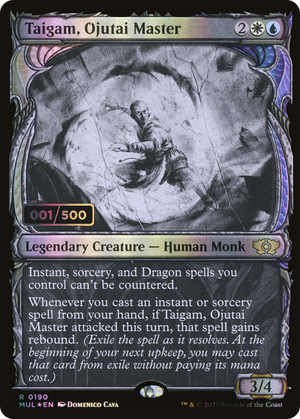
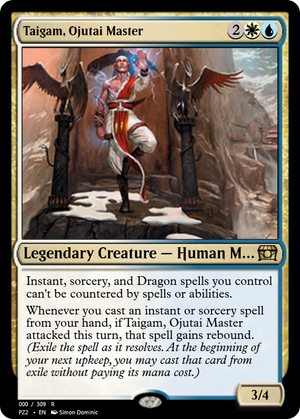
Taigam, Ojutai Master



The rebound clause is the whole engine, but note the sequencing it demands: the spell only gains rebound if Taigam has already attacked this turn, which means the payoff turn is always at least turn five and always front-loaded with combat risk. You swing with a 3/4 first, then cast into a free recast next upkeep. That ordering is the design tax on what is otherwise a spell-doubling machine: no way to hold up rebound on the same turn you play defense, no instant-speed loophole, and the trigger only reads instants and sorceries cast from hand, so graveyard recursion and flashback effects sit outside the loop entirely. The counter-immunity riders are the quieter half, and they reveal the archetype this monk was built to lead: an Ojutai Dragon control-tempo shell where your instants, sorceries, and Dragons all resolve through a wall of countermagic. The two abilities pull in opposite directions, which is the interesting friction here: the anti-counter text wants you sitting back protecting Dragons, while rebound wants you attacking every turn to double your spells. Committing Taigam to combat to fuel the payoff is exactly what exposes him to removal, and a dead Taigam means a normal spell instead of two. That tension between the defensive posture the top line implies and the aggressive posture the bottom line rewards is what keeps a four-mana spell-doubler from simply running away with every game it survives.