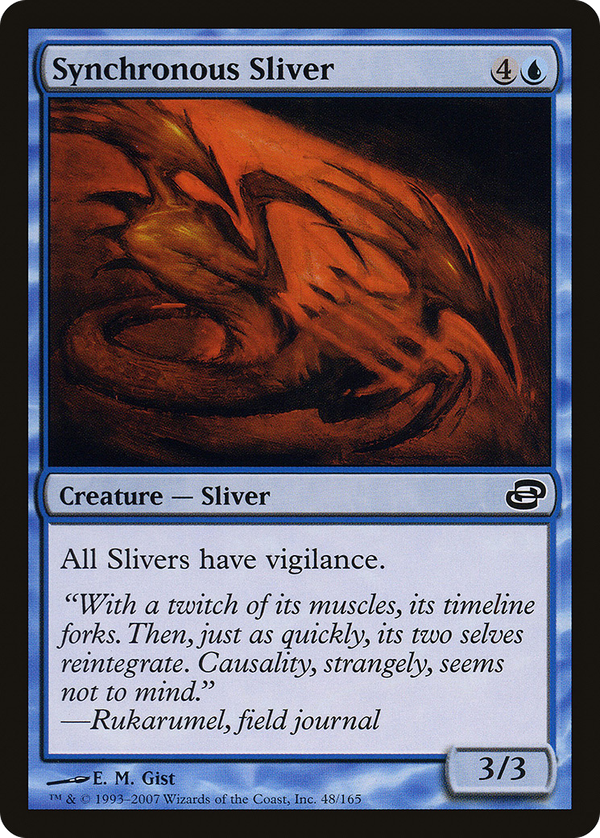
Synchronous Sliver


Slivers were designed as a shared-pool tribe: any keyword one Sliver grants, the whole board receives, which turns each new printing into a question of which combat keyword has not been distributed yet. Vigilance is one of the quieter answers, and it solves a specific problem the deck creates for itself. A wide Sliver board wants to attack every turn, but attacking taps the team out of blocks, and a creature type built on stacking buffs becomes a liability the moment it cannot defend. Granting the whole hive vigilance lets the board commit to the red zone without surrendering the ground game, so a stalled position can keep swinging while the buffed bodies stay back as blockers on the same turn. The 3/3 body for five is unremarkable, and that is the point: the card is bought for the static grant, not the creature stapled to it. What separates it from earlier keyword Slivers is timing. Most of the tribe's defensive tools are about surviving a turn; this one changes how the deck spends its turns, untapping the math that usually forces a Sliver player to choose between pressure and safety. In a vacuum it does little; alongside the rest of the hive it removes the tax on aggression that wide tribal boards otherwise pay every combat step.