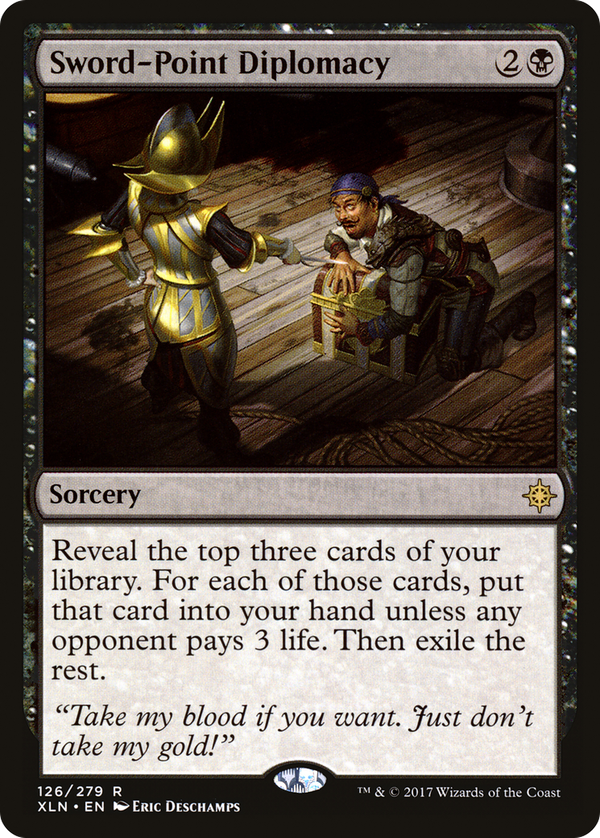
Sword-Point Diplomacy


This hands the choice to the wrong player and builds the entire design around that. Most card-advantage spells pay you in cards or your opponent in pain on a fixed split; here the split is theirs to set, three times over, three life at a time. The math is cruel by construction: against a healthy life total, opponents will often just pay nine and let you draw nothing, so the spell behaves like Mind Rot pointed at their clock instead of their hand. As their life total drops, the calculus flips, and every card you reveal becomes a question they cannot afford to answer. That marks it as a closer's tool rather than an engine: it converts damage you have already dealt into resources, demanding the opponent be low enough that bleeding out to refuse you is the worse of two bad options. The exile clause on the back end enforces the discipline; whatever they buy back by paying life is gone forever, so a deep dig is punished as readily as it is rewarded. This is black's tax-and-edict logic refracted into card advantage: an effect that prices an opponent's choices in life rather than mana, the same structural bargain as a Phyrexian rite, pointed at your hand size. The payoff rewards aggression that has already done its work, a narrower brief than raw draw but a sharper one.