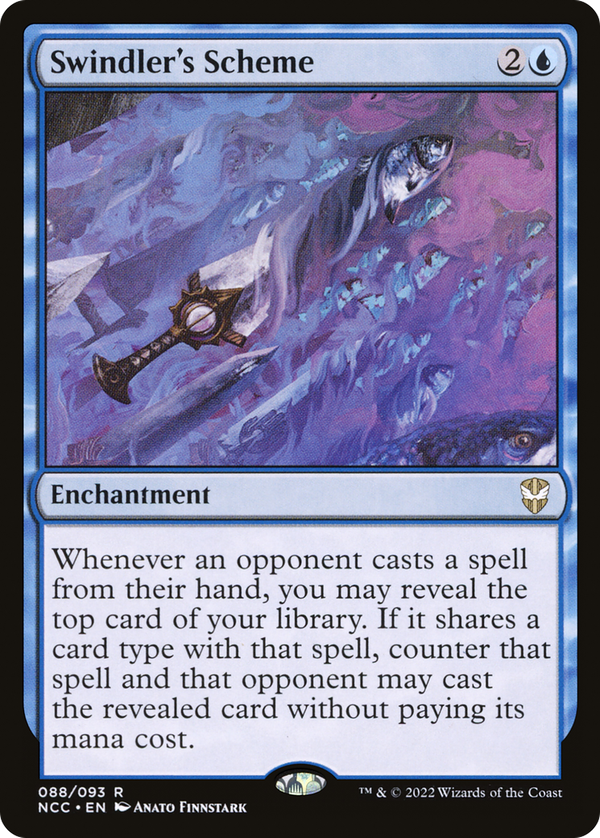
Swindler's Scheme


Most counterspells are a binary: pay the mana, the spell dies. This one turns permission into a gamble resolved off the top of your library, and the payoff structure is what makes it strange. It answers spells cast from an opponent's hand, but whether you can counter depends entirely on a reveal matching card types, so the same enchantment might blank against a creature and then wall the next three instants your library happens to be stacked with. That variance is the whole appeal for the deckbuilder willing to warp toward it: shave a card type out of your own list and you sharpen the odds on the ones that remain. The wrinkle that separates it from a plain permission piece is the second clause: the opponent whose spell you just countered gets to cast your revealed card for free. You are not only denying their spell, you are handing them a card from your own deck at the moment you would have drawn it, and handing it to the exact player you were trying to stop. That inverts the usual read on card quality. Revealing something expensive is a disaster, because you are gifting a big spell to an opponent for zero mana; the safe reveals are the ones that do the least in their hands, permanents whose upside is negligible for them or spells you can immediately answer. It is permission that punishes a stacked deck as readily as it rewards one.