Swift Response


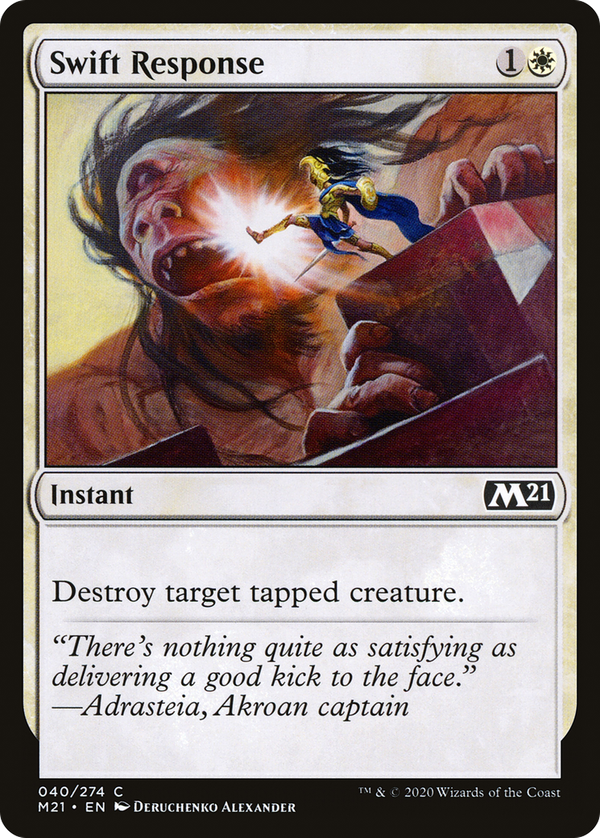
The tapped-creature clause is the tax, and it changes what kind of removal this is. Unconditional destroy at two mana would be premium; restricting it to tapped creatures reroutes the card away from proactive answers and toward punishing commitment. It cannot hit a creature held back on defense, cannot pre-empt a threat before it acts, and cannot break up an untapped board before combat. What it can do is kill the attacker that just swung, or the creature its controller tapped to pay for an ability. That dependence pulls the card into a reactive posture: you hold it up and let the opponent tell you when to use it, which rewards patience but hands the initiative to whoever decides to tap out first. White has a whole family of removal that trades unconditional coverage for a lower rate, including effects that require the target to be attacking; the tapped requirement is a slightly broader window than combat-only clauses, since it also catches creatures spent on tap abilities. Destroy rather than exile matters against recursion and death triggers, and the trade-off is deliberate: it answers threats that die to counters and sacrifice, not threats built to survive their own removal. But at instant speed the flexibility is real. This is the removal that answers a threat at the exact moment it becomes vulnerable, rather than the removal that dictates terms.