Swan Song

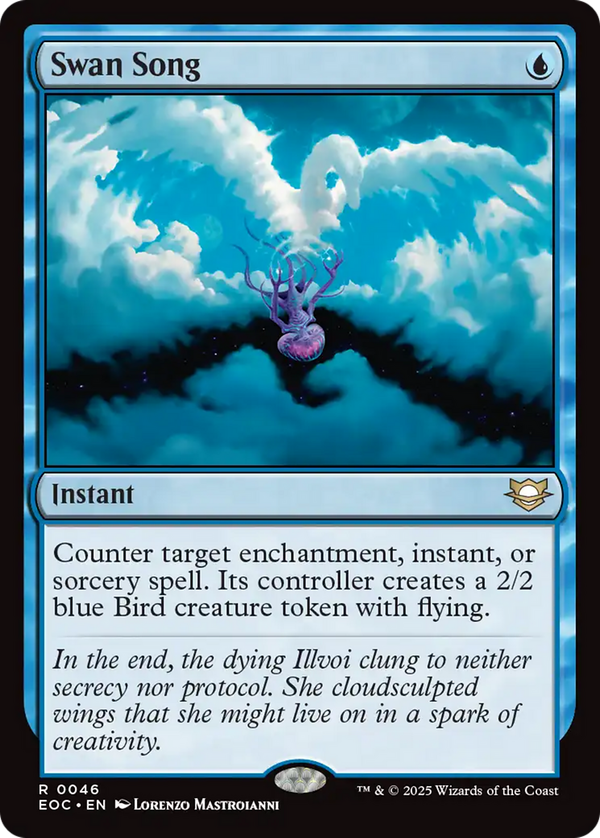
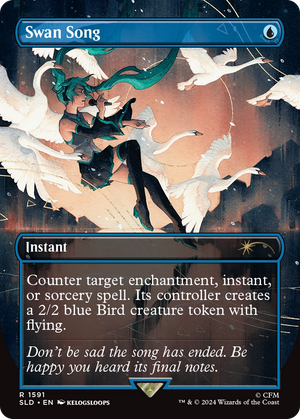
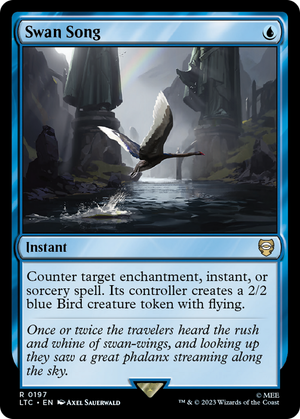
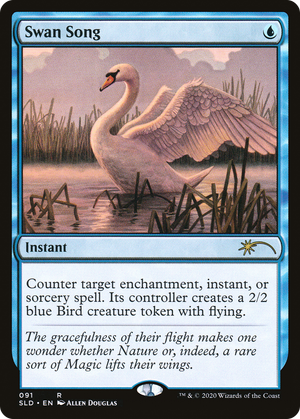
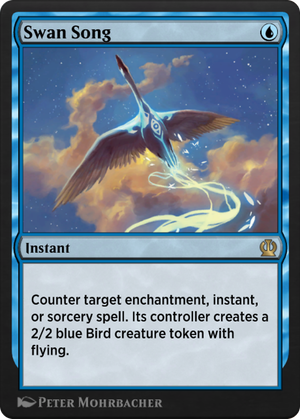
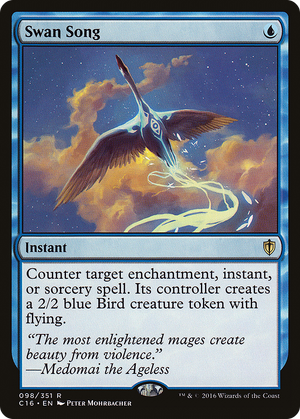
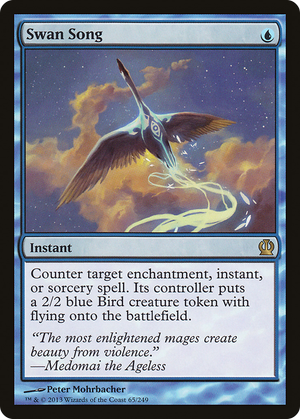
The bargain here is the giveaway. A one-mana counter that hits the three spell types most likely to threaten a control deck (the wraths, the burn, the ramp enchantments) is priced like a Force Spike, but it pays its way by handing your opponent a 2/2 flier. That token is the design lever that makes the rate work: it keeps Swan Song from being a strictly-better cheap counter by guaranteeing the player you just answered now has a board presence and a clock. The math usually still favors the caster, because trading one card for one card while spending one mana to deny a three- or four-mana spell is a tempo win even at the cost of a bird, but the body is real, and it punishes the counter when the game stretches long enough for a 2/2 to matter. The narrowness is the second restriction: it cannot touch creatures, artifacts, planeswalkers, or activated abilities, so it is a specialist's answer rather than a catch-all. The Bird is also a quiet flavor coup, since a swan song is the final act before silence, and the spell quite literally produces a swan-adjacent bird as the spell it cancels goes out. As a piece of counter-magic philosophy, it sits in the tradition of cheap conditional counters that give something back, a line that includes Mana Tithe and Daze, but Swan Song is the rare one whose drawback materializes on the battlefield instead of in lost cards.