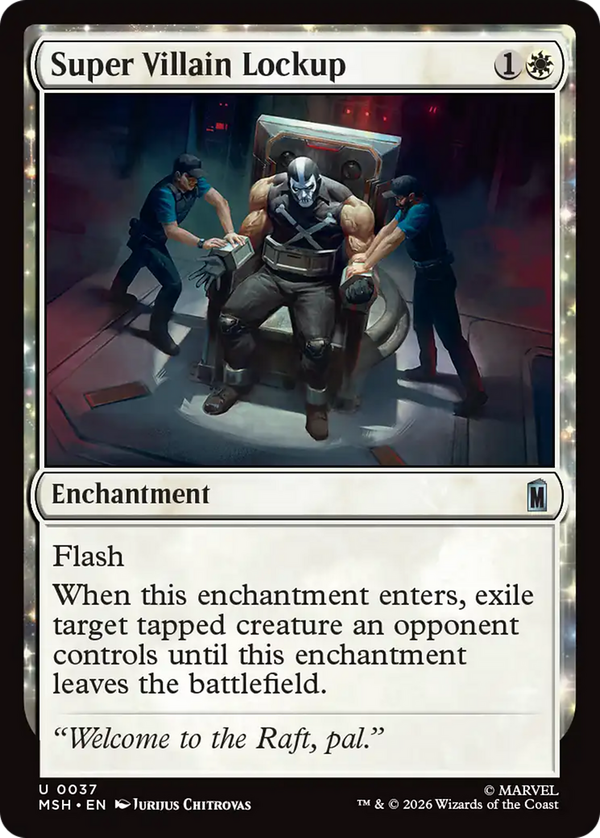
Super Villain Lockup


The tapped-creature clause is the constraint that pays for the whole thing. White has long had temporary-exile removal, the Oblivion Ring family that answers anything on the battlefield, but this one refuses to touch a creature that hasn't already committed to combat or an activated ability. That restriction turns a two-mana enchantment into a reactive tool rather than a proactive one: it wants to catch an attacker after it swings, a blocker locked down, or a creature that just tapped for its ability, and it does that at instant speed thanks to flash. The tension between flash and the tapped requirement is the whole trick. Leaving the mana open through your opponent's combat lets them commit an attacker, then removes the threat mid-swing while nothing is spent until the target is worth it. The exile persists for the enchantment's lifetime, so it functions as removal opponents can undo by answering the enchantment itself, the same fragile-prison bargain that has defined this class of white effect for generations. Where the older O-Ring template offered a clean, unconditional answer, this one deliberately can't be one: it demands the target already be tapped, trading flexibility for the ambush window that flash provides.