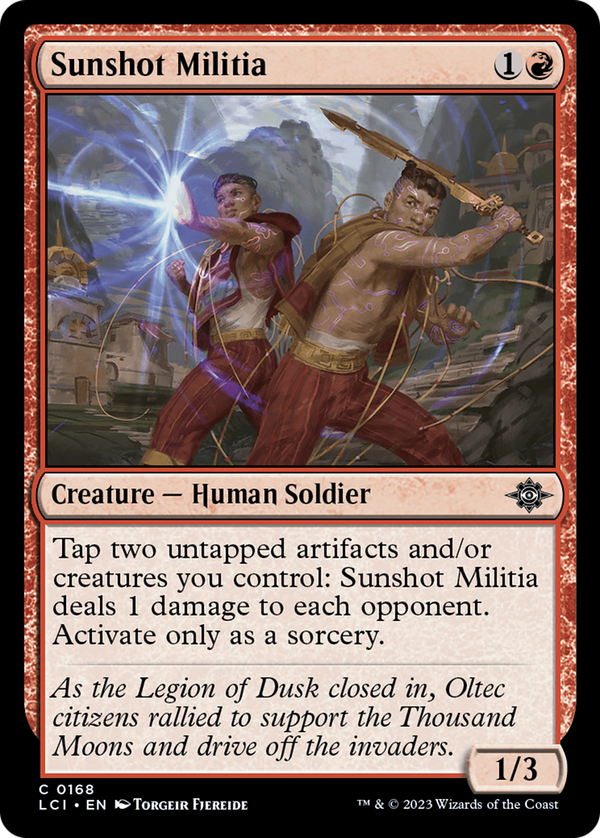
Sunshot Militia


The tap cost is the whole design conversation here. A 1/3 body is defensive filler on its own; the payload is that it converts a wide, static board into a repeatable clock against every opponent at once. What makes the cost specific is its breadth: it happily accepts tokens, mana rocks, mopey utility bodies, or the militia itself as fuel, so anything that survives combat with nothing better to do can feed the drain. In a go-wide shell that already floods the board with permanents idling after the attack step, that flexibility turns spare presence into damage without asking you to swing into blockers. The sorcery-speed clause matters because it locks the ability to your own main phase: you cannot hold up the activation on an opponent's turn to squeeze in extra reach at instant speed, so it commits you to a proactive main-phase engine before you know what your opponents do. The "each opponent" wording is the multiplayer tell: the ability reaches players only (never planeswalkers, never creatures), and one activation scales its output with the number of opponents at the table while the sacrifice-free tap cost stays fixed. That quietly bends the card toward a full table rather than a duel. It rewards you for having built a saturated board and then having spare taps to spend, a payoff whose ceiling is set entirely by how many permanents you can afford to leave home each turn.