Sunset Revelry


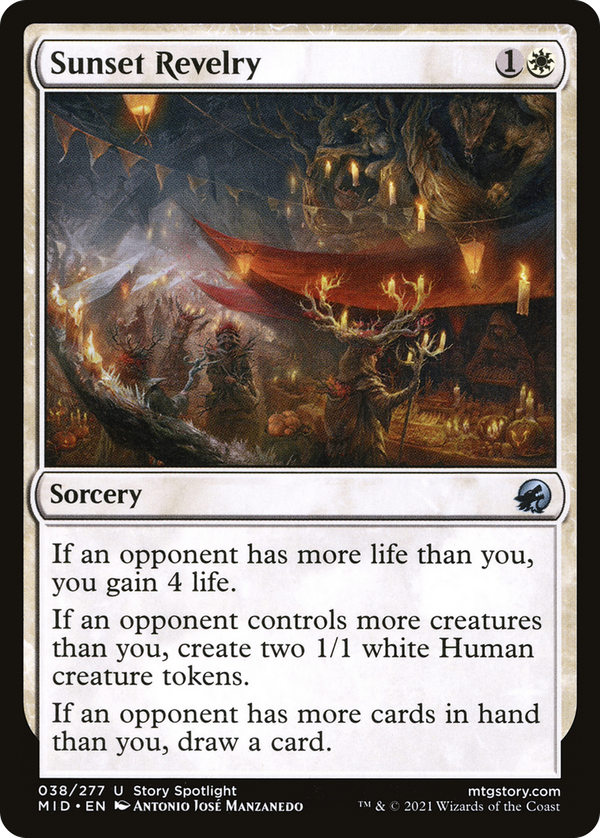
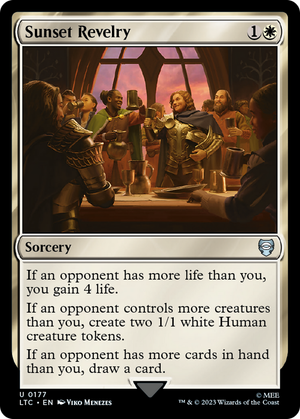
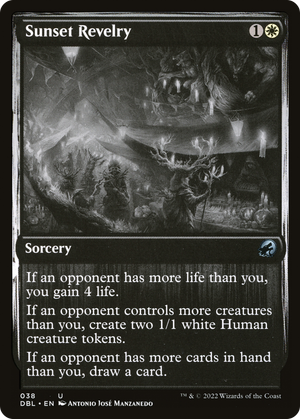
The catch-up spell as a design pattern: three independent checks, each keyed to a different axis of the board (life total, creature count, cards in hand), and each paying off only when you are the one behind. The conditions are non-exclusive and cheap to satisfy at once, which is where the two mana actually earns its keep. Fall behind on all three fronts, and one card buys four life, two bodies, and a fresh draw; stay even, and it does nothing, which is exactly the point. This is the deliberate inverse of the payoff card that snowballs a lead. It rewards the player getting beaten, and it prices that reward at a level where holding it in hand does not cost you tempo when you are ahead. The design lineage runs through comeback effects that scale off an opponent's advantage, but most of those pick a single lever (a life swing, a card, a token). Bundling all three into separate conditional clauses lets a single printing plug whatever hole the game has actually opened, without ever overperforming for the player who did not need it. The friction is honest: against a mirror-even board it is a blank, and you cannot force the conditions, only meet them. It is a repair tool, tuned to be dead weight in the hands of whoever is winning.